
FAST-Infra Review | Q3 2026: Growing the Group Around Resilience
What’s a Rich Text element?
The rich text element allows you to create and format headings, paragraphs, blockquotes, images, and video all in one place instead of having to add and format them individually. Just double-click and easily create content.
H1
H2
H3
H4
H5
H6


Static and dynamic content editing
A rich text element can be used with static or dynamic content. For static content, just drop it into any page and begin editing. For dynamic content,
add a rich text field to any collection and then connect a rich text element to that field in the settings panel. Vsadsadsdasdasdasdasdoila!
- A rich text element can be used with static or dynamic content. For static content, just drop it into any page and begin editing. For dynamic content, add a rich text field to any collection and then connect a rich text element to that field in the settings panel. Voila!
- t to that field
- t to that field
-
How to customize formatting for each rich text
How to customize formatting for each rich text
How to customize formatting for each rich text
Headings, paragraphs, blockquotes, figures, images, and figure captions can all be styled after a class is added to the rich text element using the "When inside of" nested selector system.
What’s a Rich Text element?
The rich text element allows you to create and format headings, paragraphs, blockquotes, images, and video all in one place instead of having to add and format them individually. Just double-click and easily create content.
H1
H2
H3
H4
H5
H6
Static and dynamic content editing
A rich text element can be used with static or dynamic content. For static content, just drop it into any page and begin editing. For dynamic content,
add a rich text field to any collection and then connect a rich text element to that field in the settings panel. Vsadsadsdasdasdasdasdoila!
- A rich text element can be used with static or dynamic content. For static content, just drop it into any page and begin editing. For dynamic content, add a rich text field to any collection and then connect a rich text element to that field in the settings panel. Voila!
- t to that field
- t to that field
-
How to customize formatting for each rich text
How to customize formatting for each rich text
How to customize formatting for each rich text
Headings, paragraphs, blockquotes, figures, images, and figure captions can all be styled after a class is added to the rich text element using the "When inside of" nested selector system.Q3 2026 covered three months of new members, partnerships delivering on the ground, new research, and a sharper focus on resilience, from Climate Week NYC to Paris InfraWeek. Here’s what happened between July and September, and who joined us along the way.
Welcoming two new members to the Fast-Infra Group
We are pleased to welcome Proparco and Bankers without Boundaries as the newest members of the FAST-Infra Group.
Proparco is the private-sector arm of the AFD Group. It brings a development-finance perspective and a presence in over a hundred countries.
Bankers without Boundaries is FAST-Infra Group’s first member from civil society, with a focus on making infrastructure resilience investable. Delphine Quéniart, its Managing Director, Global Head of Climate Infrastructure & Capital Advisory, spoke at “Making Resilience Investable” at Paris InfraWeek on 2 November.
Reaching new regions through our partners
In the H1 Review, we said our reach would grow through partners who already have the relationships in their own markets. This quarter, that started to happen.
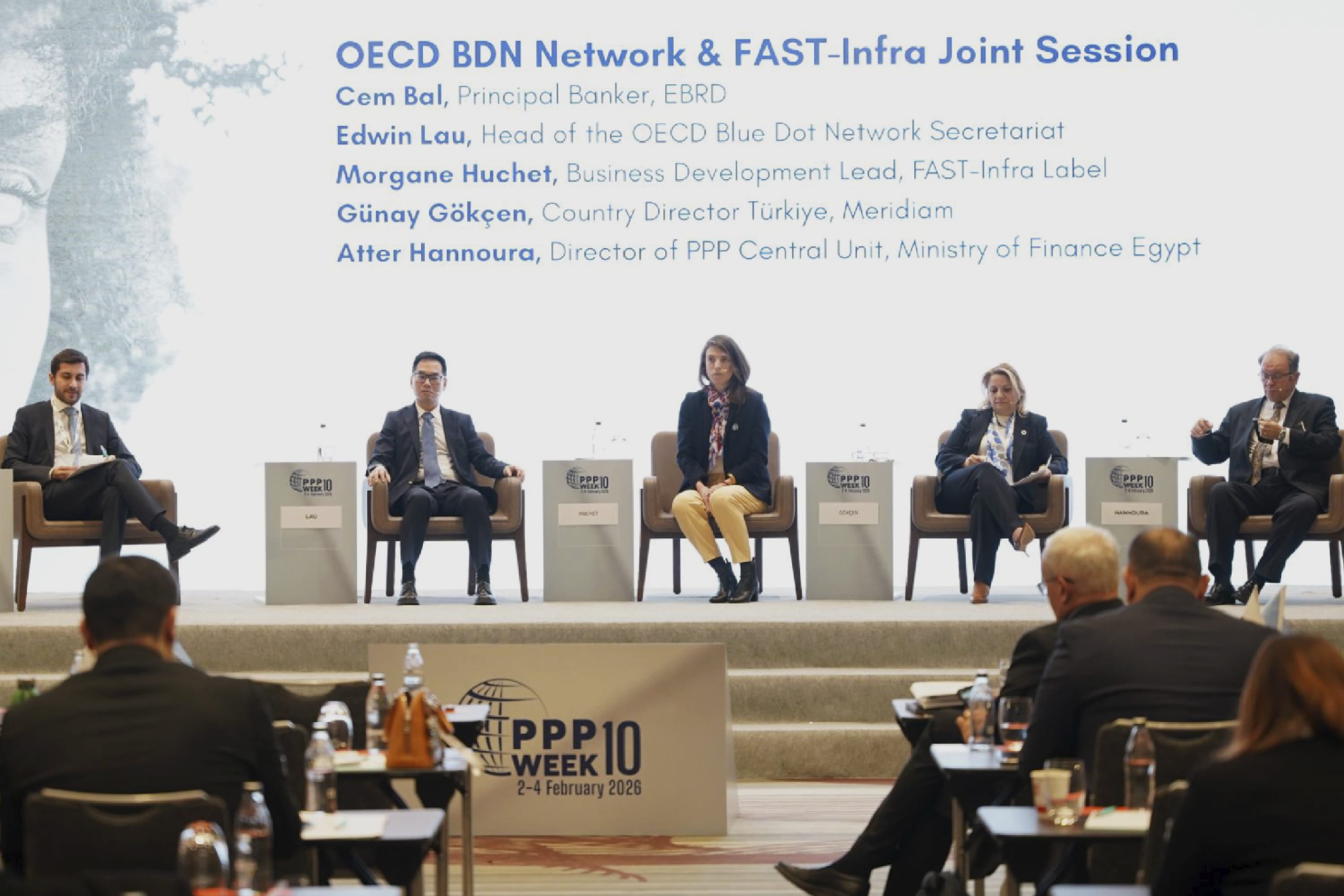
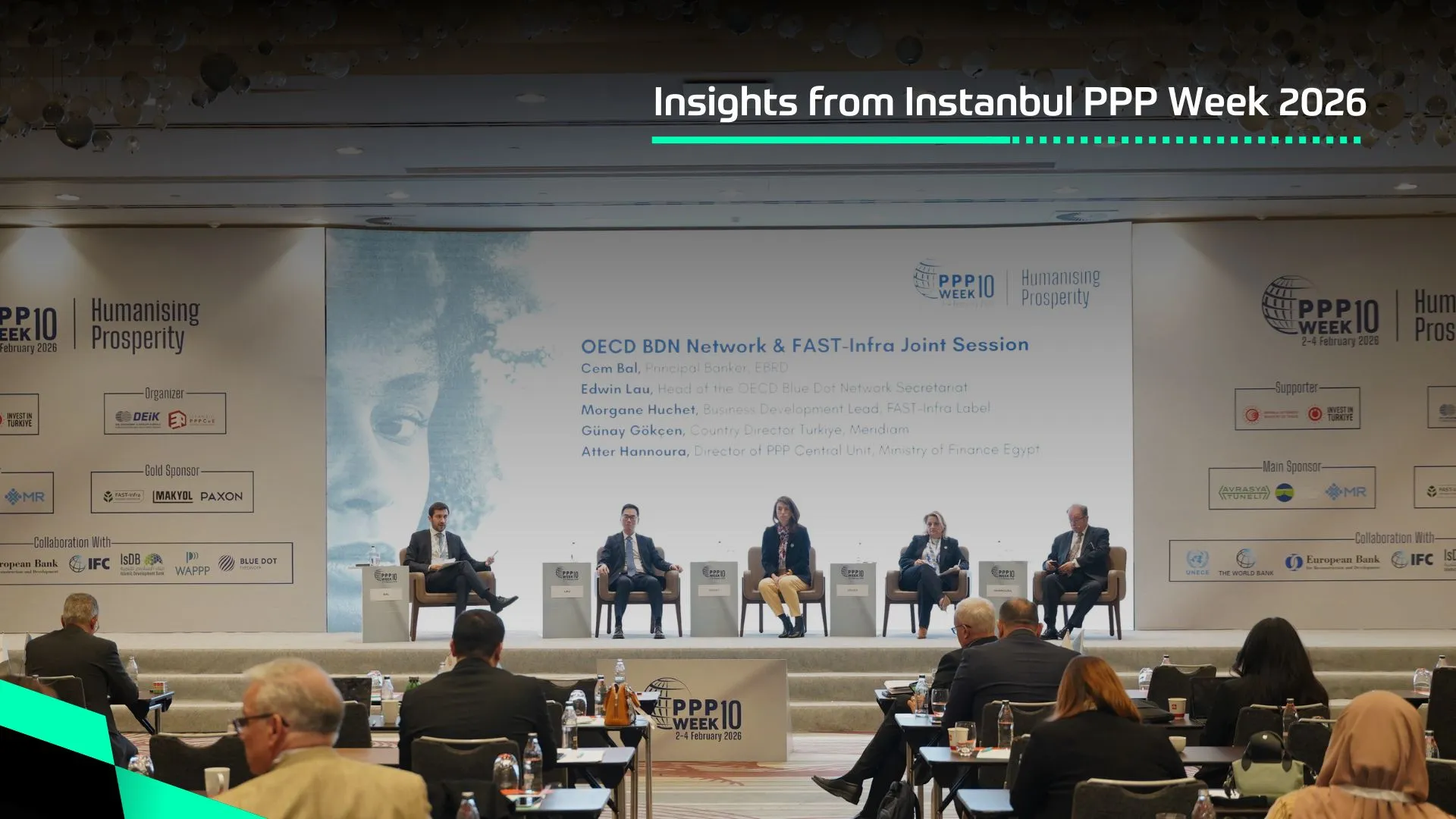
Earlier this year, we signed a memorandum with the Istanbul PPP Centre of Excellence, an APMG-accredited training body that has run the annual Istanbul PPP Week since 2015. The partnership traces straight back to the joint session we ran with the Blue Dot Network at Istanbul PPP Week in February. It has already produced its first programme, delivered by the Label Secretariat with SECO funding, in collaboration with the Kyrgyz Republic.
In September, KPMG Middle East announced its partnership with FAST-Infra and GIB, the Global Infrastructure Basel Foundation, which runs the FAST-Infra Label Secretariat. In practice, that means KPMG’s infrastructure advisers will help governments and investors across the Gulf apply the Label’s criteria as they plan and finance major projects.
Between the two, we now have partners carrying the Label into Central Asia and the Gulf, working with the public authorities and investors who decide what gets built and to what standard.
Our own thought leadership events
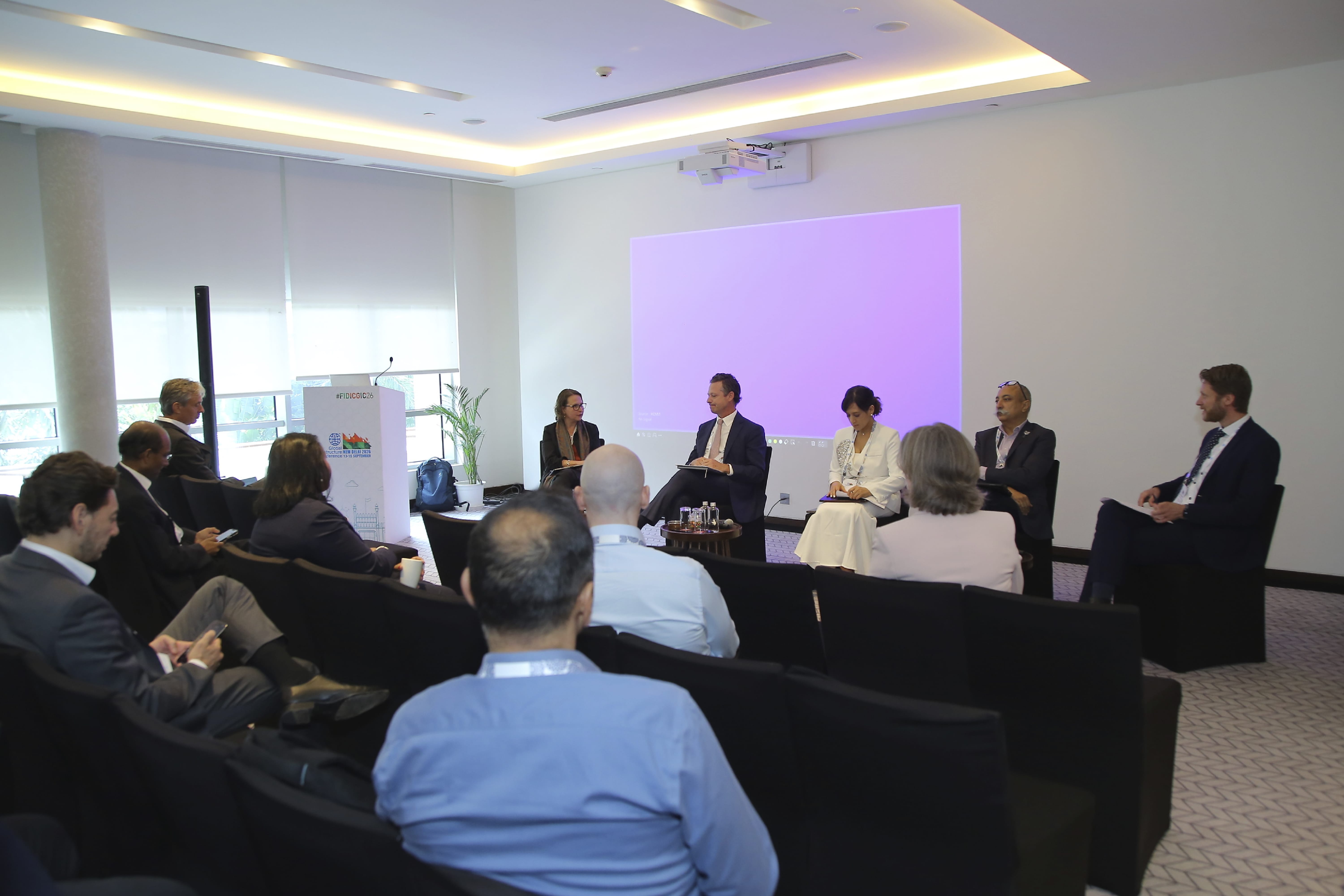
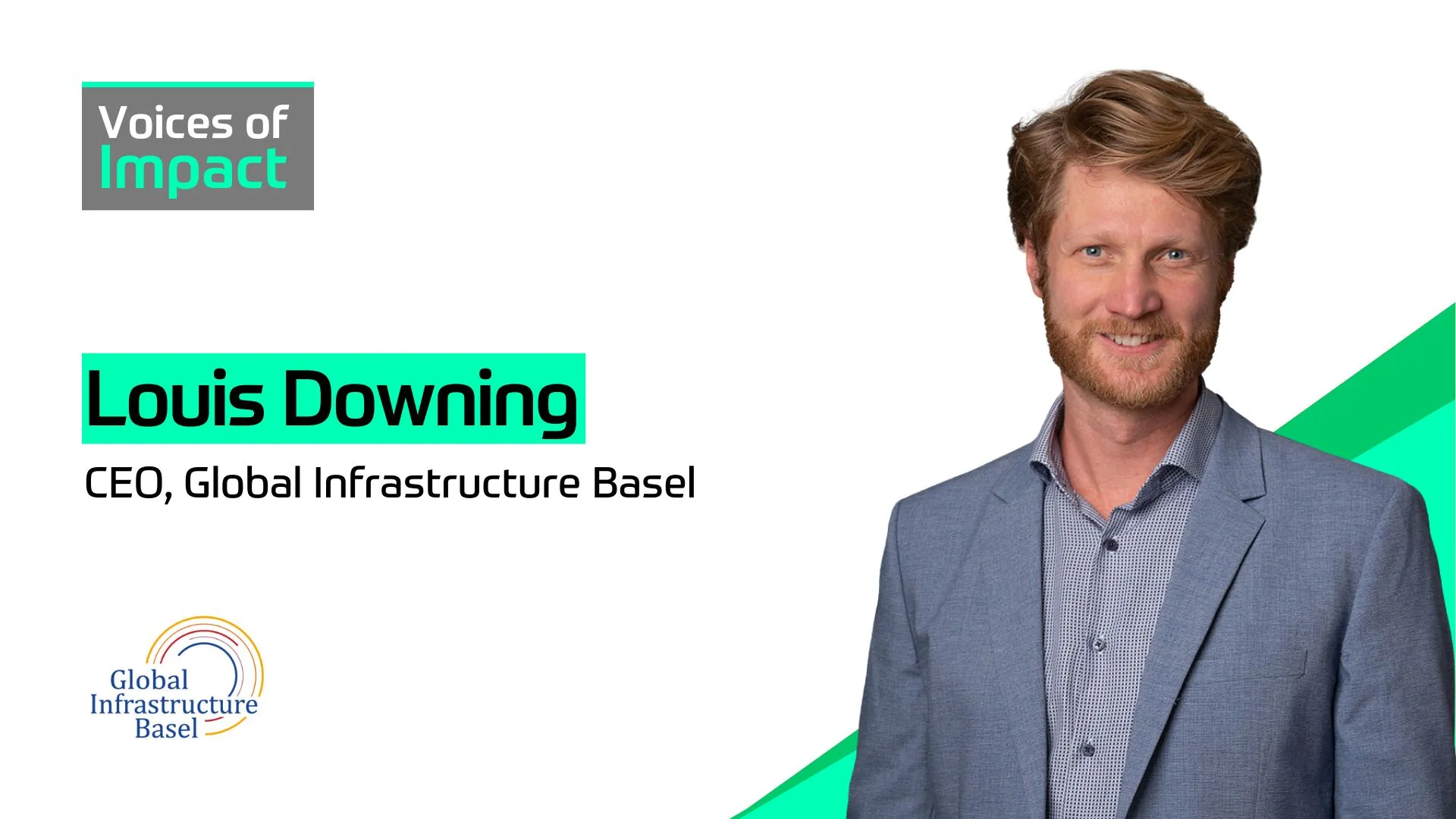
From 13 to 15 September, Louis Downing, CEO of GIB, represented FAST-Infra at the FIDIC Global Infrastructure Conference 2026 in New Delhi. Reflecting on Nobel Peace Laureate Kailash Satyarthi’s keynote, Louis argued that compassion should be a design principle in infrastructure. Questions of access and inclusion belong at the drawing board, from the very first sketch. Every investment and design decision shapes who infrastructure serves, whether people without means can use it, and whether it connects communities or divides them. He came away with one principle, which is to design with the most deprived person in mind. Read Louis’s reflections here.

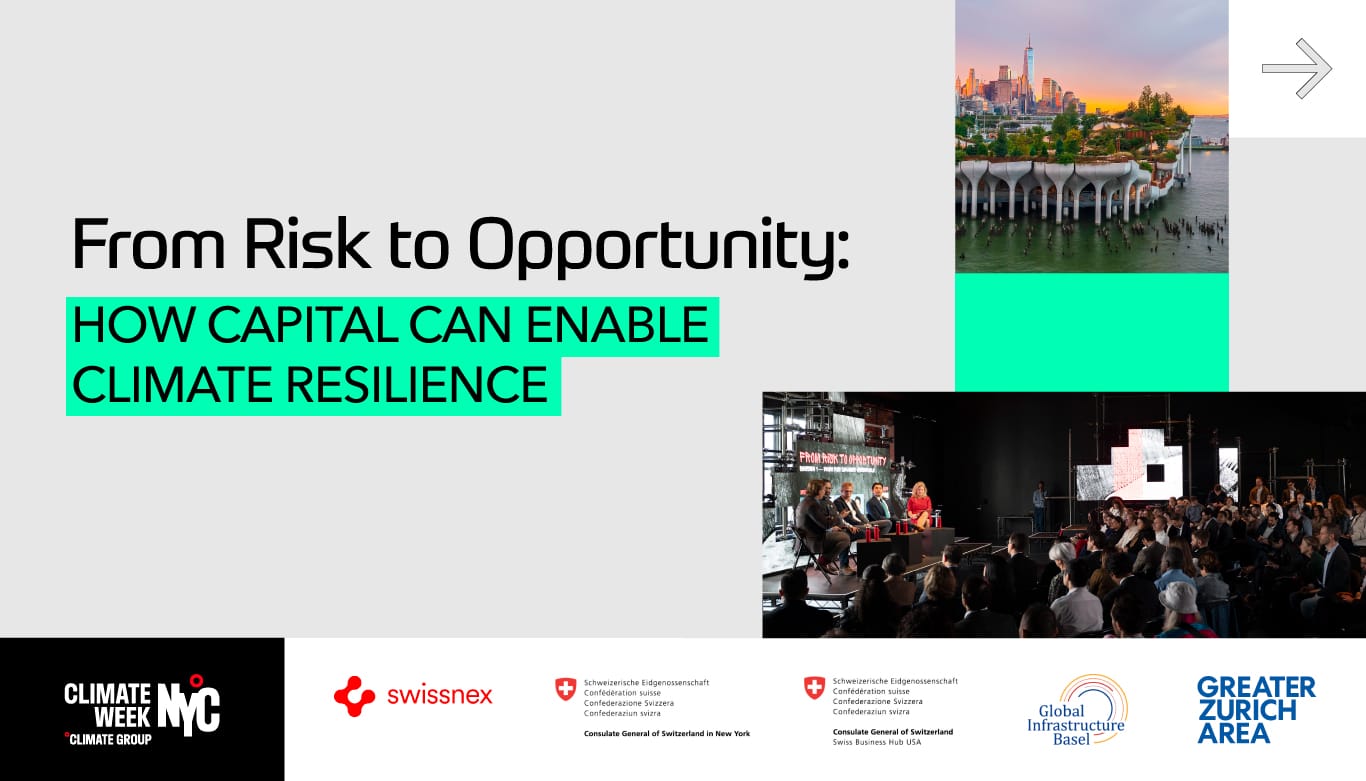
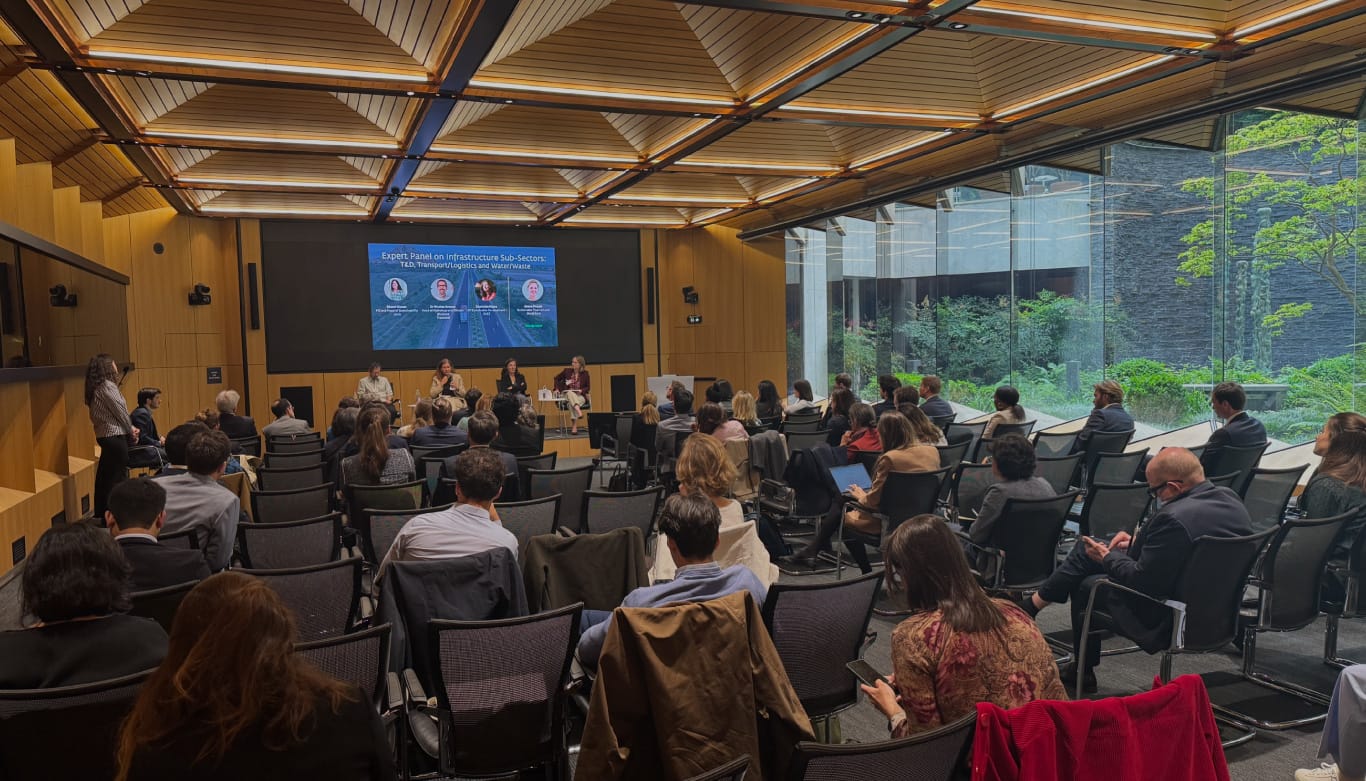
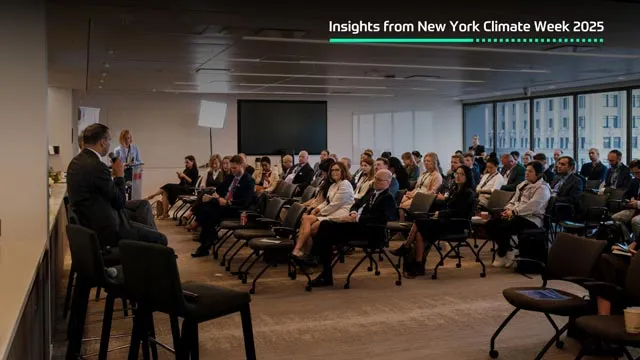
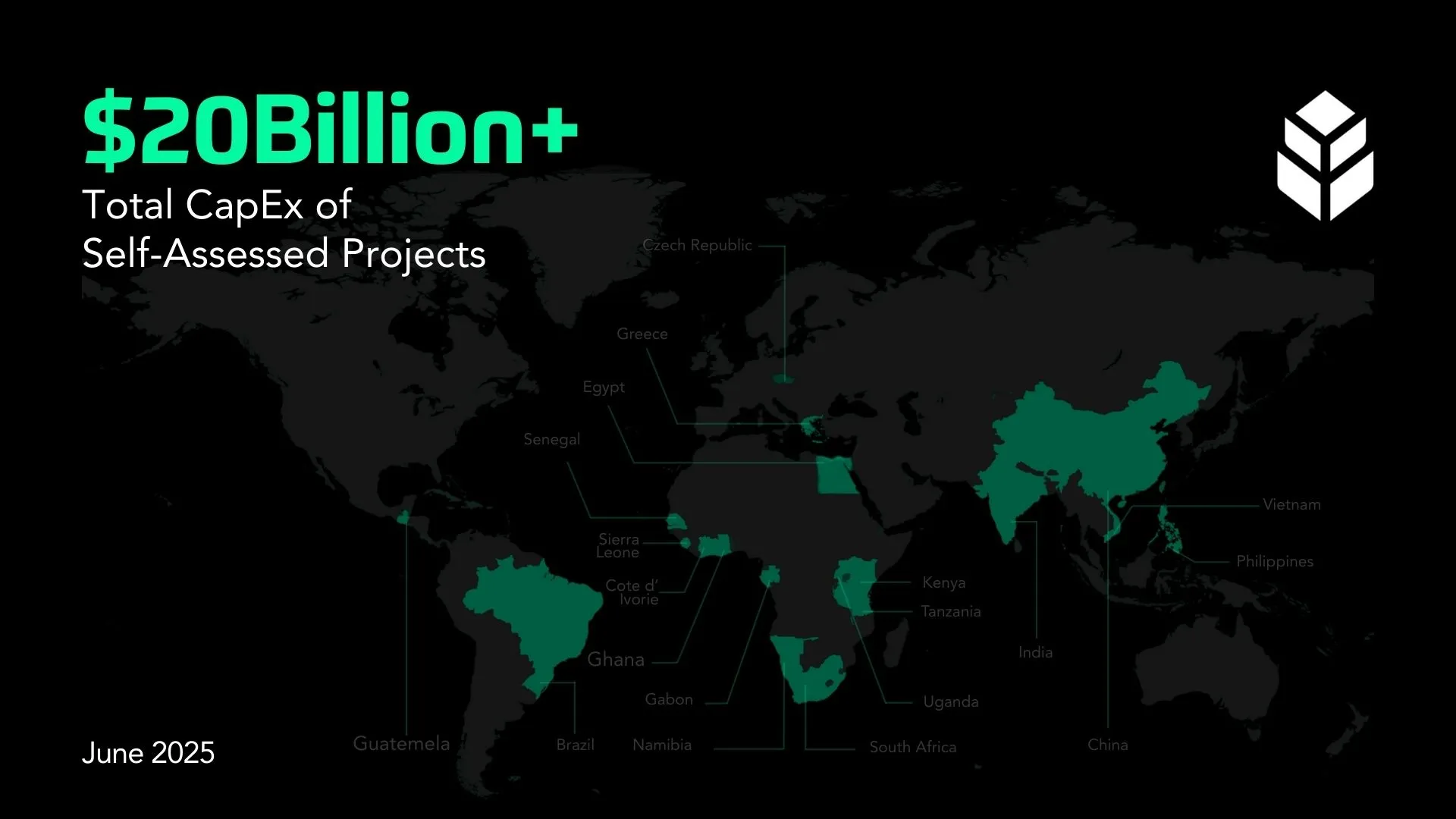
On 23 September, we joined Swissnex in Boston and New York and partners at Climate Week NYC for “From Risk to Opportunity: How Capital Can Enable Climate Resilience” at Performance Space New York. Across three panels, insurers, investors, development bankers, policymakers, and community advocates worked through what it takes to get resilient infrastructure insured, financed, and built. Natalia Moudrak, founder of The Resilience Table, set out the scale of the problem. Natural disasters and extreme weather have caused more than USD 300 billion in economic losses in almost every year of the past decade. More than half of those losses go uninsured, rising to around 90% in emerging markets. Each panel came back to the same request: settle questions of risk, insurance, and community needs early, while the design can still change. The FAST-Infra Label gives developers, investors, and insurers a shared standard to do that from a project’s first stage. As at 1 September 2026, 391 projects had been created on the Label, with 228 self-assessed labels across 44 countries. Access the full event recap here.

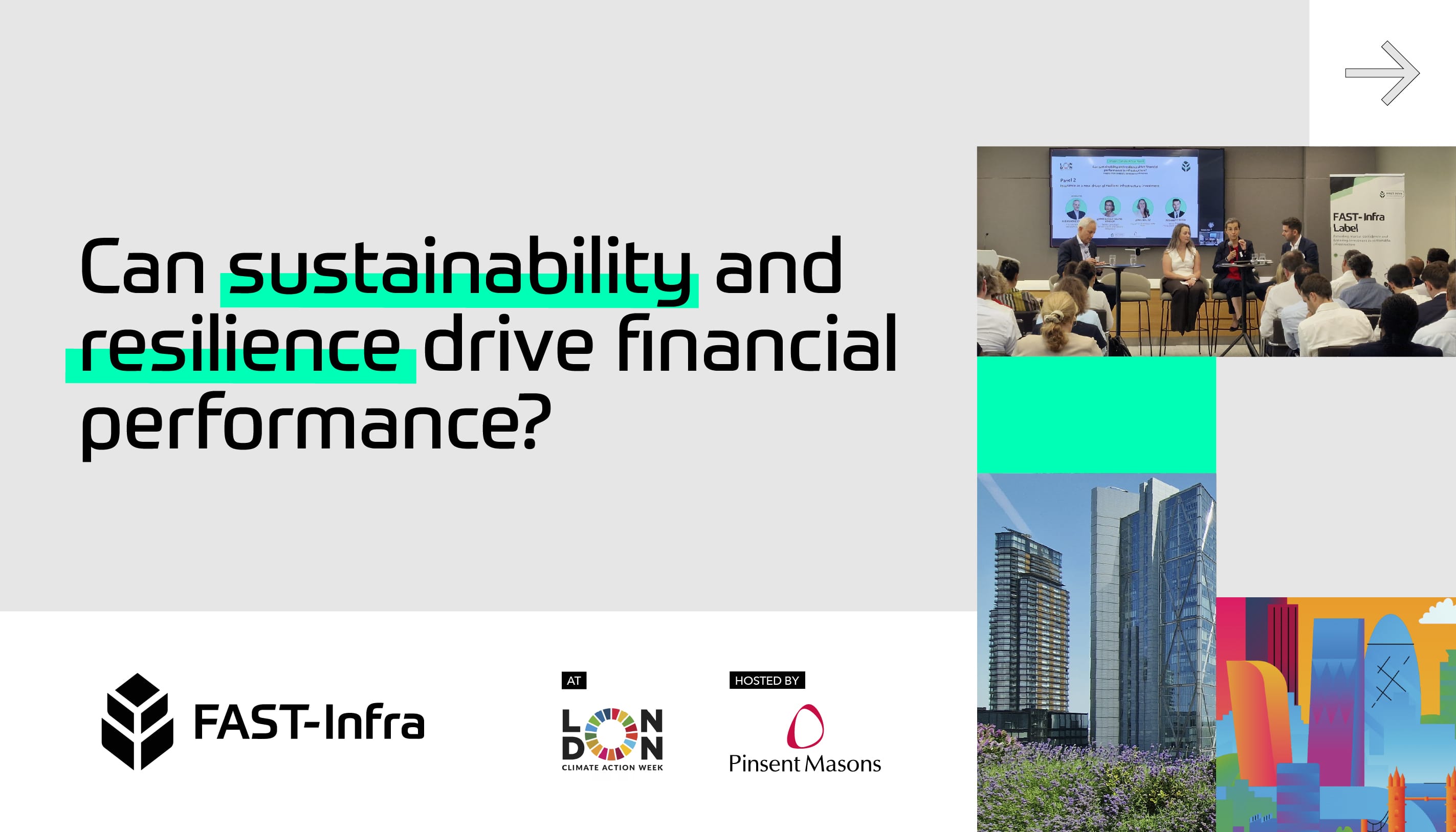
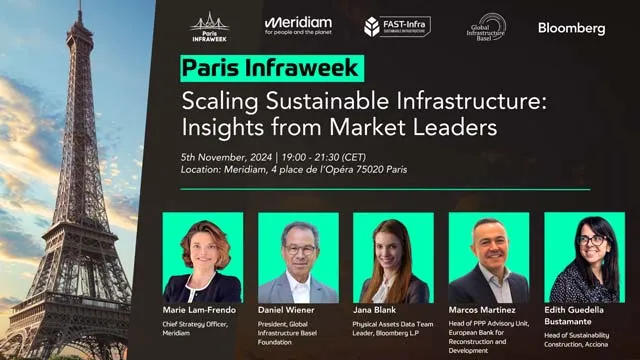
On 2 November, we were at Paris InfraWeek for “Making Resilience Investable.” We co-hosted the session with the Africa Infrastructure Fellowship Program (AIFP) on the Inaugural Day of the event’s 10th edition, with a focus on projects in Africa. The seminar looked at how investors can assess, price, and finance resilience in infrastructure, a question our Insurability Working Group explored in its first phase, which concluded in early 2026.
Delphine Quéniart of Bankers without Boundaries was among the speakers, bringing the perspective of one of our newest members to the discussion. H.E. Allé Nar Diop, Minister to Senegal’s Minister of Economy, Finance, and Planning, in charge of the Economy, Planning, and Cooperation, opened the session. FAST-Infra Board Member Christian Déséglise of Columbia University then moderated a panel with experts from Proparco, IFC, the Coalition for Disaster Resilient Infrastructure, the Global Infrastructure Facility, and more, with Morgane Huchet, Project Manager for the FAST-Infra Label at GIB, joining for the Label. The session took place at the Ministry of Economy and Finance in Bercy.
New research on infrastructure data and investment
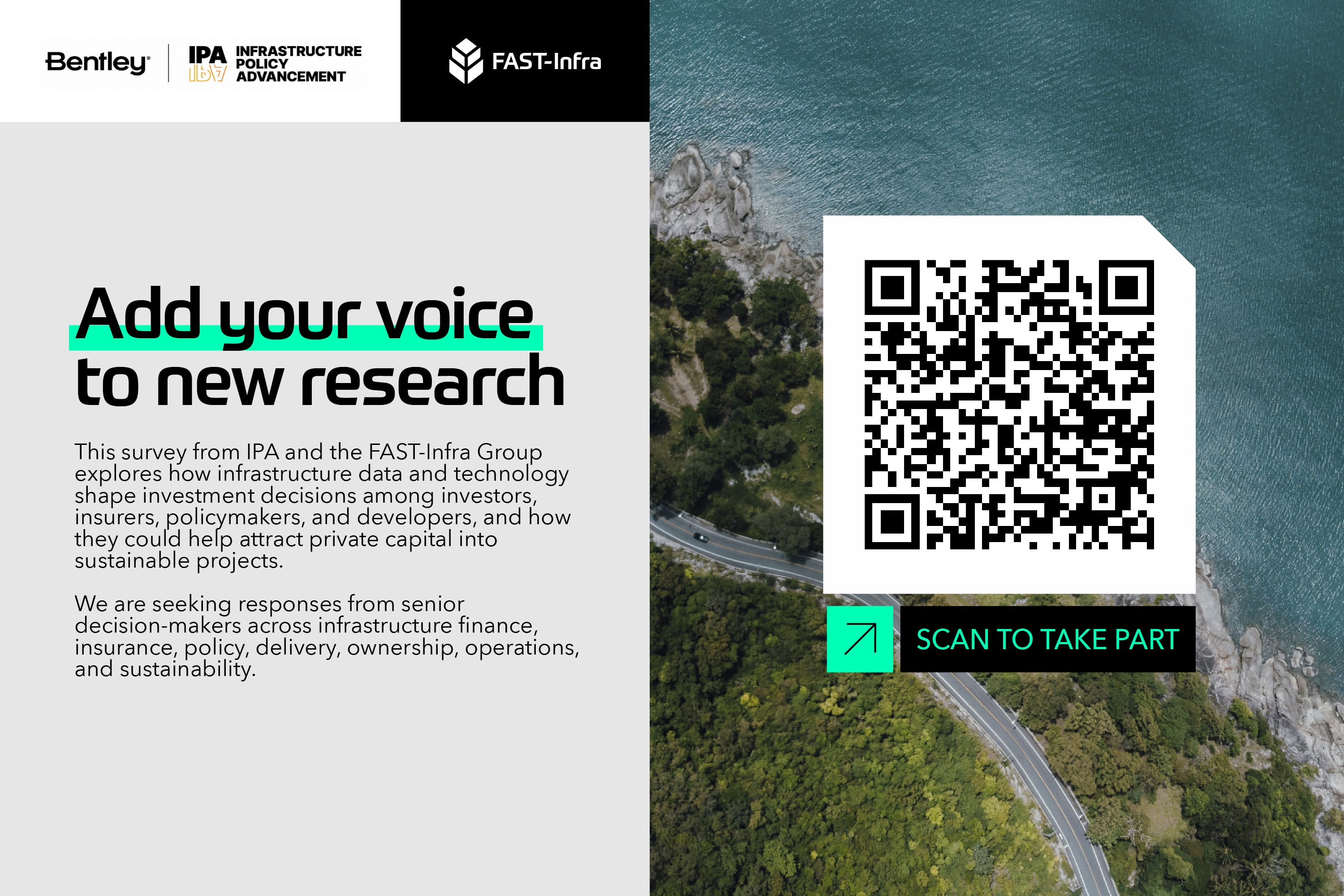
Infrastructure Policy Advancement (IPA) and FAST-Infra Group are now research partners on a global study, building on our collaboration with Bentley Systems in the first half of the year.
The research looks at whether, how, and under what conditions infrastructure data and technology influence investment, financing, underwriting, sustainability assurance, and asset-management decisions. It responds to a challenge raised repeatedly at our joint events. Substantial capital is available globally, yet the supply of bankable sustainable infrastructure projects remains limited. The study will also explore how data generated from infrastructure technologies could support labels and taxonomies, including the FAST-Infra Label. Findings from a global survey, interviews, and case studies will inform a white paper due to be published in 2027.
We want to hear from senior decision-makers and experienced practitioners across infrastructure finance, investment, insurance, policy, procurement, delivery, ownership, operations, sustainability, engineering, technology, and data. You don’t need to use digital tools or infrastructure labels to take part. Experience of considering, adopting, or rejecting them is just as valuable. All responses are confidential and reported in aggregate.
Take the confidential survey and help shape practical recommendations for the sector.
Looking ahead
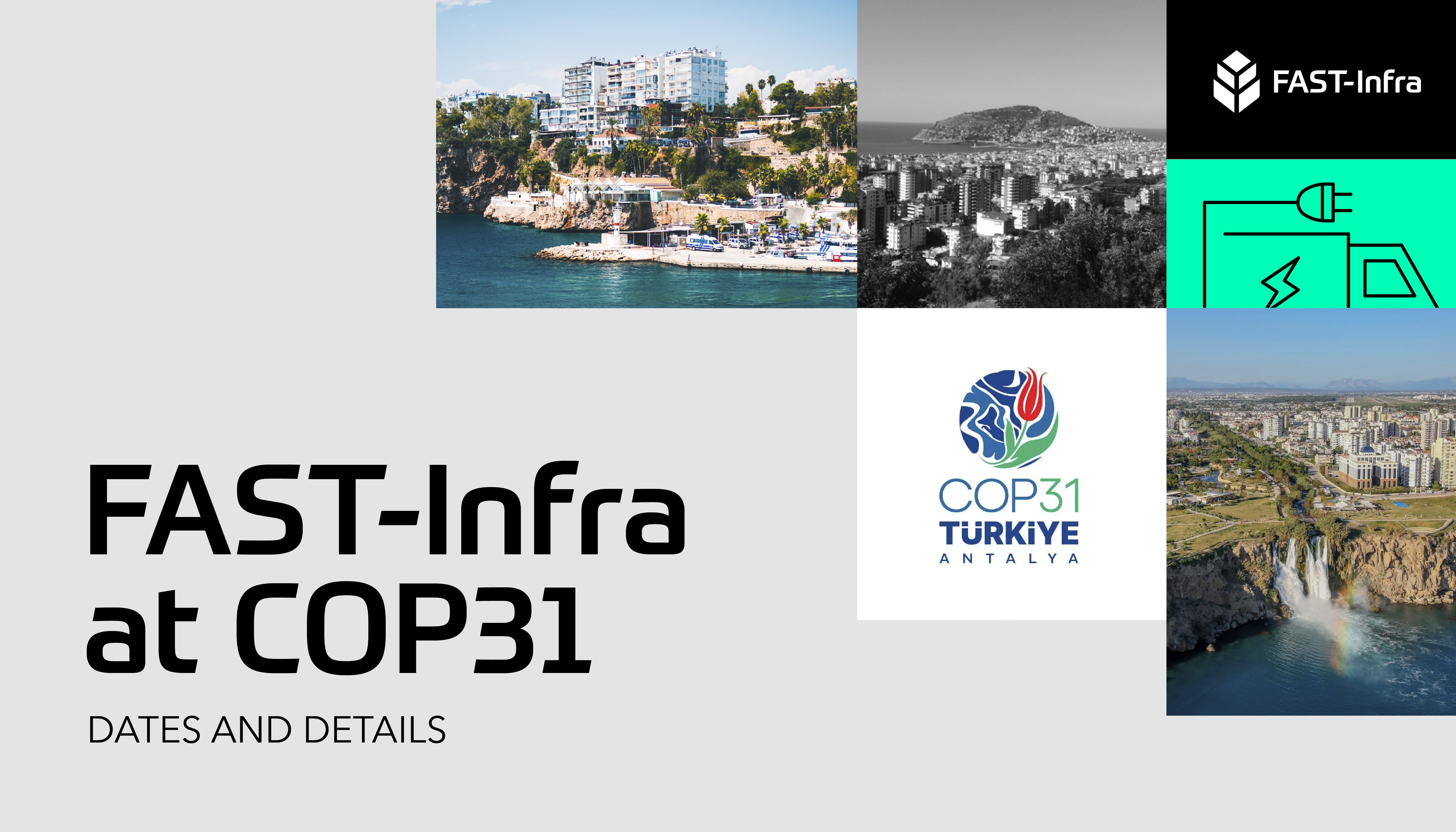
Two things defined this quarter for us: a growing community, with two new members bringing development-finance and civil-society perspectives into the Group, and partnerships turning into programmes. The final quarter brings COP31 in Antalya from 9 November, followed by our Board and General Assembly on 2 December.
This progress comes from steady work with members and partners who share one goal. They want infrastructure that lasts, financed at a price that reflects how resilient it is.
Want to follow where we go next? Find us on LinkedIn.
Further Reading






















To stay in the loop, subscribe to our news and updates.

