
FAST-Infra at London Climate Action Week 2026: Insights from Investors, Developers, and Insurers
What’s a Rich Text element?
The rich text element allows you to create and format headings, paragraphs, blockquotes, images, and video all in one place instead of having to add and format them individually. Just double-click and easily create content.
H1
H2
H3
H4
H5
H6


Static and dynamic content editing
A rich text element can be used with static or dynamic content. For static content, just drop it into any page and begin editing. For dynamic content,
add a rich text field to any collection and then connect a rich text element to that field in the settings panel. Vsadsadsdasdasdasdasdoila!
- A rich text element can be used with static or dynamic content. For static content, just drop it into any page and begin editing. For dynamic content, add a rich text field to any collection and then connect a rich text element to that field in the settings panel. Voila!
- t to that field
- t to that field
-
How to customize formatting for each rich text
How to customize formatting for each rich text
How to customize formatting for each rich text
Headings, paragraphs, blockquotes, figures, images, and figure captions can all be styled after a class is added to the rich text element using the "When inside of" nested selector system.
What’s a Rich Text element?
The rich text element allows you to create and format headings, paragraphs, blockquotes, images, and video all in one place instead of having to add and format them individually. Just double-click and easily create content.
H1
H2
H3
H4
H5
H6
Static and dynamic content editing
A rich text element can be used with static or dynamic content. For static content, just drop it into any page and begin editing. For dynamic content,
add a rich text field to any collection and then connect a rich text element to that field in the settings panel. Vsadsadsdasdasdasdasdoila!
- A rich text element can be used with static or dynamic content. For static content, just drop it into any page and begin editing. For dynamic content, add a rich text field to any collection and then connect a rich text element to that field in the settings panel. Voila!
- t to that field
- t to that field
-
How to customize formatting for each rich text
How to customize formatting for each rich text
How to customize formatting for each rich text
Headings, paragraphs, blockquotes, figures, images, and figure captions can all be styled after a class is added to the rich text element using the "When inside of" nested selector system.Event Recap: 'Can sustainability and resilience drive financial performance in infrastructure? Insights from investors, developers and insurers'
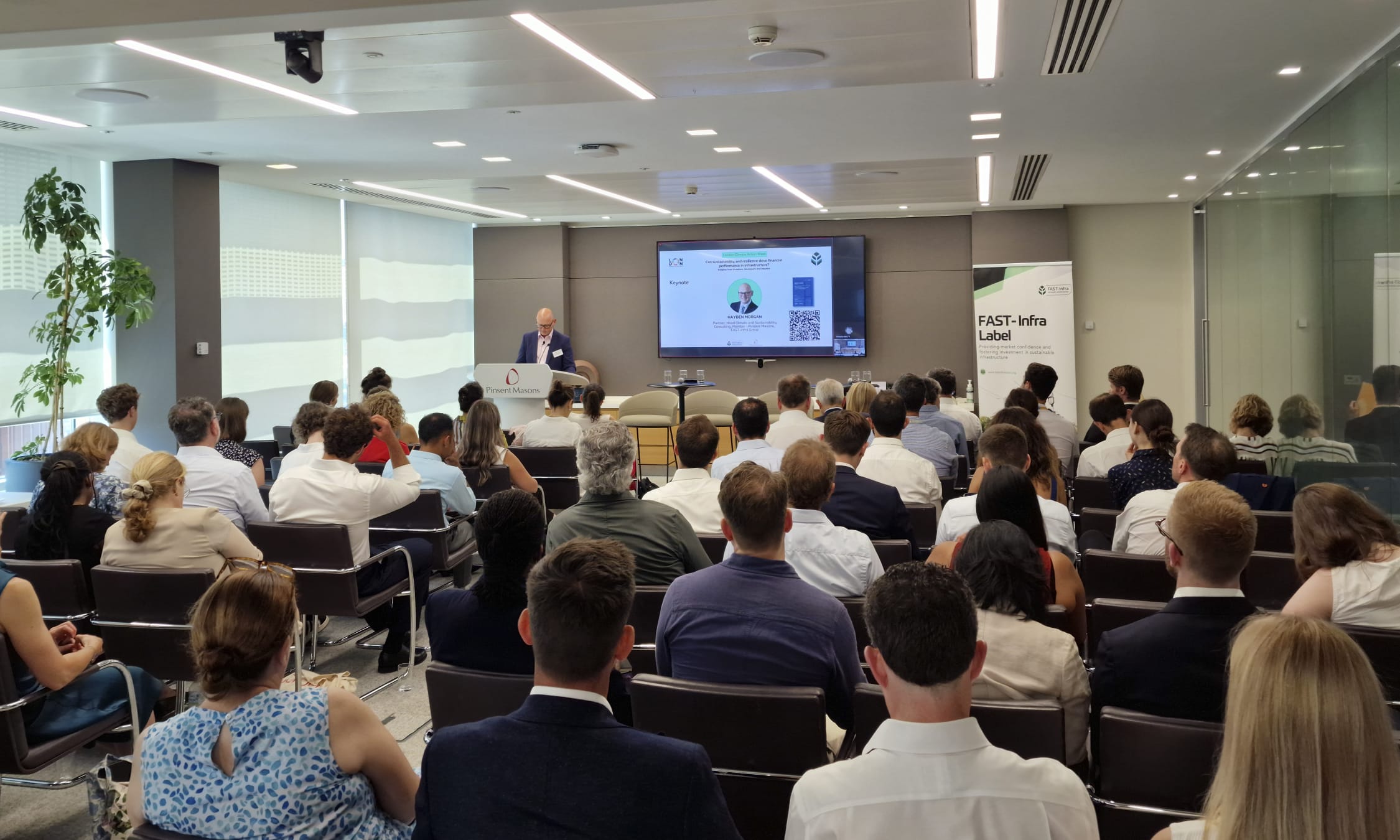
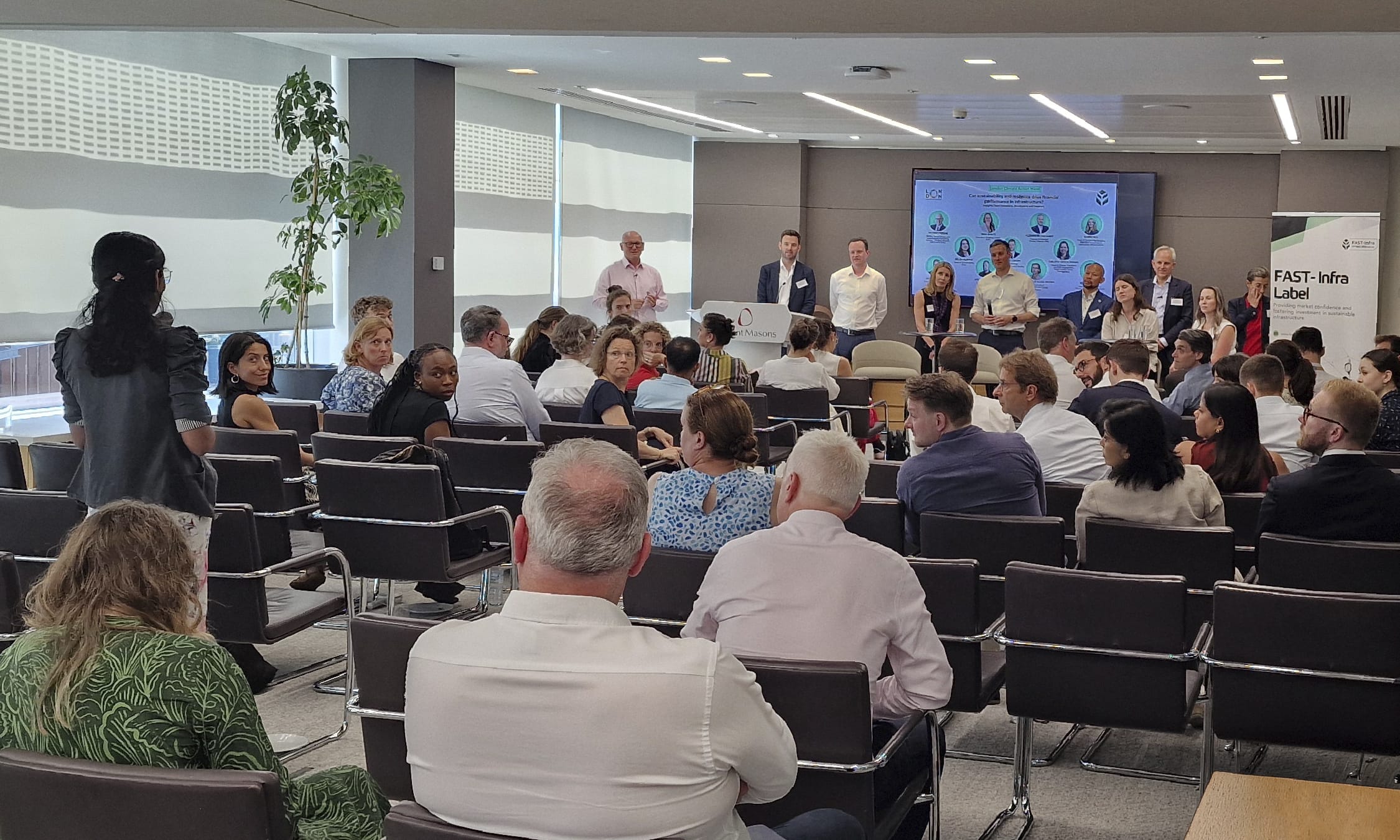
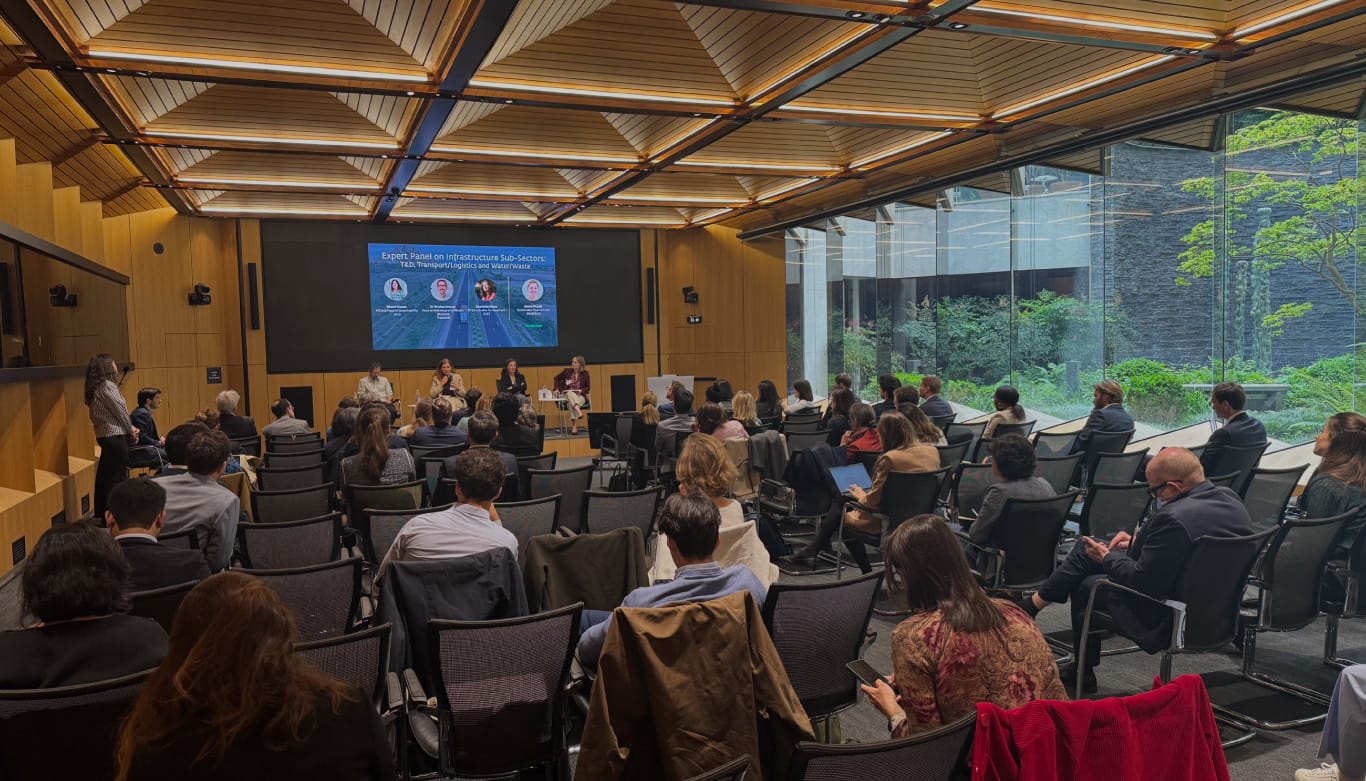
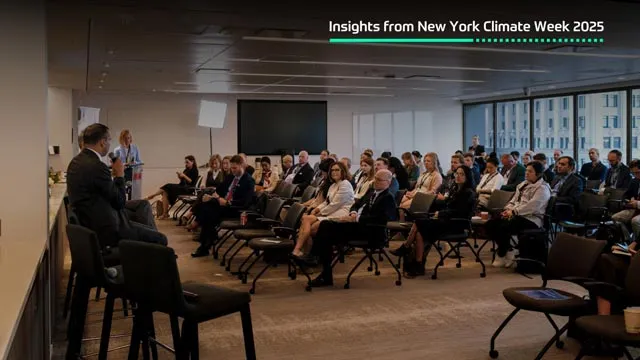
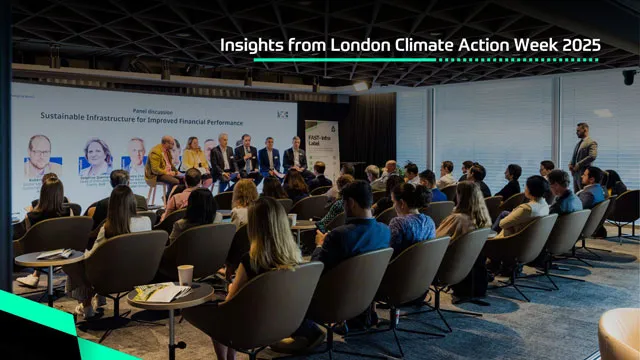
On 24 June 2026, FAST-Infra partnered with international law firm Pinsent Masons to convene the leading voices of investors, project developers, and insurers for our London Climate Action Week 2026 event - 'Can sustainability and resilience drive financial performance in infrastructure? Insights from investors, developers and insurers.'
With the city facing an unprecedented heatwave precisely during the London Climate Action Week, the timing was not lost on anyone in the room. Much of today’s infrastructure was designed for a climate that no longer exists, and that gap is precisely what the FAST-Infra Label was created to close: a shared, credible standard for what resilient, investable infrastructure looks like.
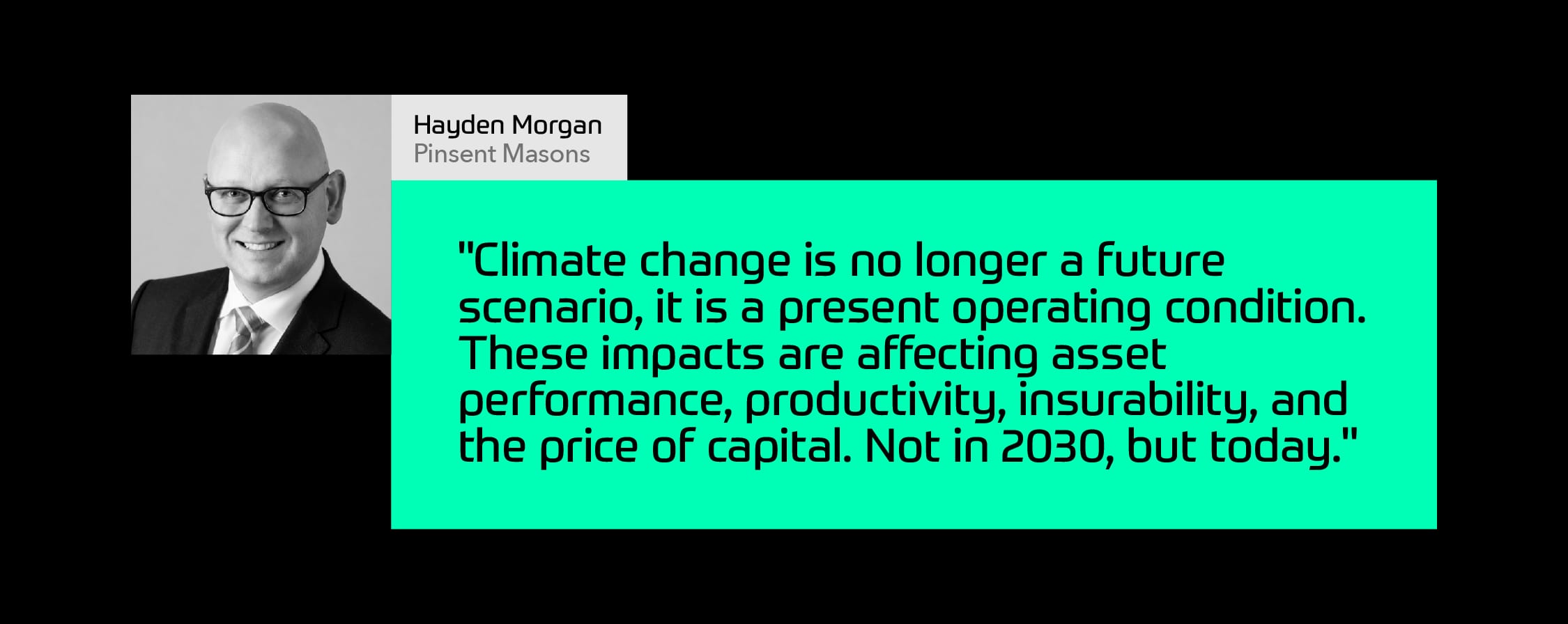
Resilience is not just a cost, but a driver of returns
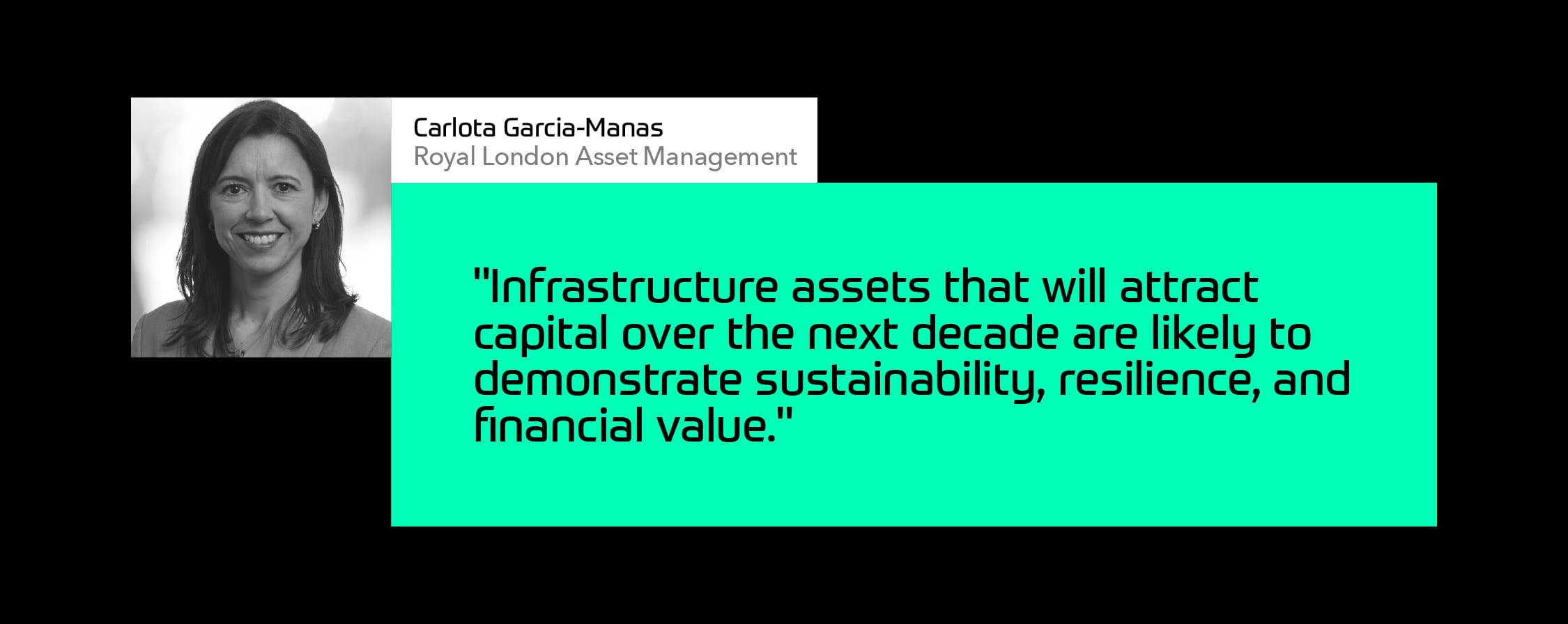
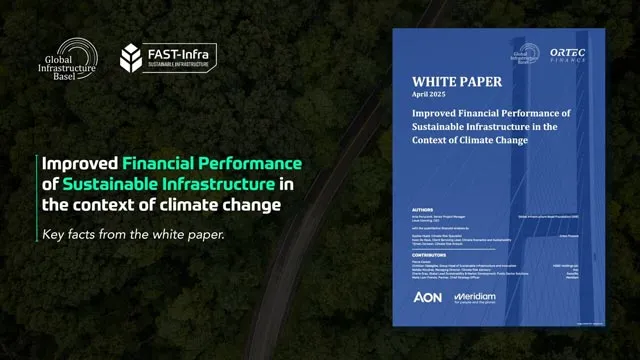
The event's central question received a fairly consistent answer all day. The opening keynote directly challenged the idea that resilience is a defensive cost to be absorbed. Citing research from Ortec Finance and Global Infrastructure Basel, speakers highlighted evidence that resilient, sustainable infrastructure delivers stronger long-term, risk-adjusted returns with lower downside volatility, and better performance under climate stress scenarios. This was highlighted by the Director of Aon's Strategy and Technology Group, Irina Waltz, who said, "Resilience should be built in, not bolted on ... When resilience information is missing, insurers are likely to apply more conservative terms: higher deductibles, lower limits and narrower coverage."
The market case, in other words, is no longer in dispute. What the room spent most of its time on was why capital still is not moving fast enough to match that case, and discussing what needs to change to fix that.
As panel moderator James Dunham, Director of Sustainability at Dalmore Capital explained, "Speaking the language of finance is what opens the door for resilience to be considered in investment committees."
Why is capital not moving faster?
Two barriers came up repeatedly, across nearly every panel:
- Absence of shared language: An insurer, a developer, an asset manager, and a project finance lender each think about "resilience" differently, and that misalignment creates friction that slows deals down. Standards and labels were repeatedly framed as earning their value less as a checklist and more as a translation layer, giving different parts of the capital stack a common reference point.
- A lack of legal enforceability: The opening keynote argued that positive commitments only hold when they are hardwired into the legal architecture of a deal: concession and PPP agreements, shareholder agreements, credit agreements as conditions precedent, and EPC and O&M contracts, backed by real KPIs, milestone-linked payments, and remedies for non-compliance. Without that, sustainability commitments remain aspirational rather than binding.
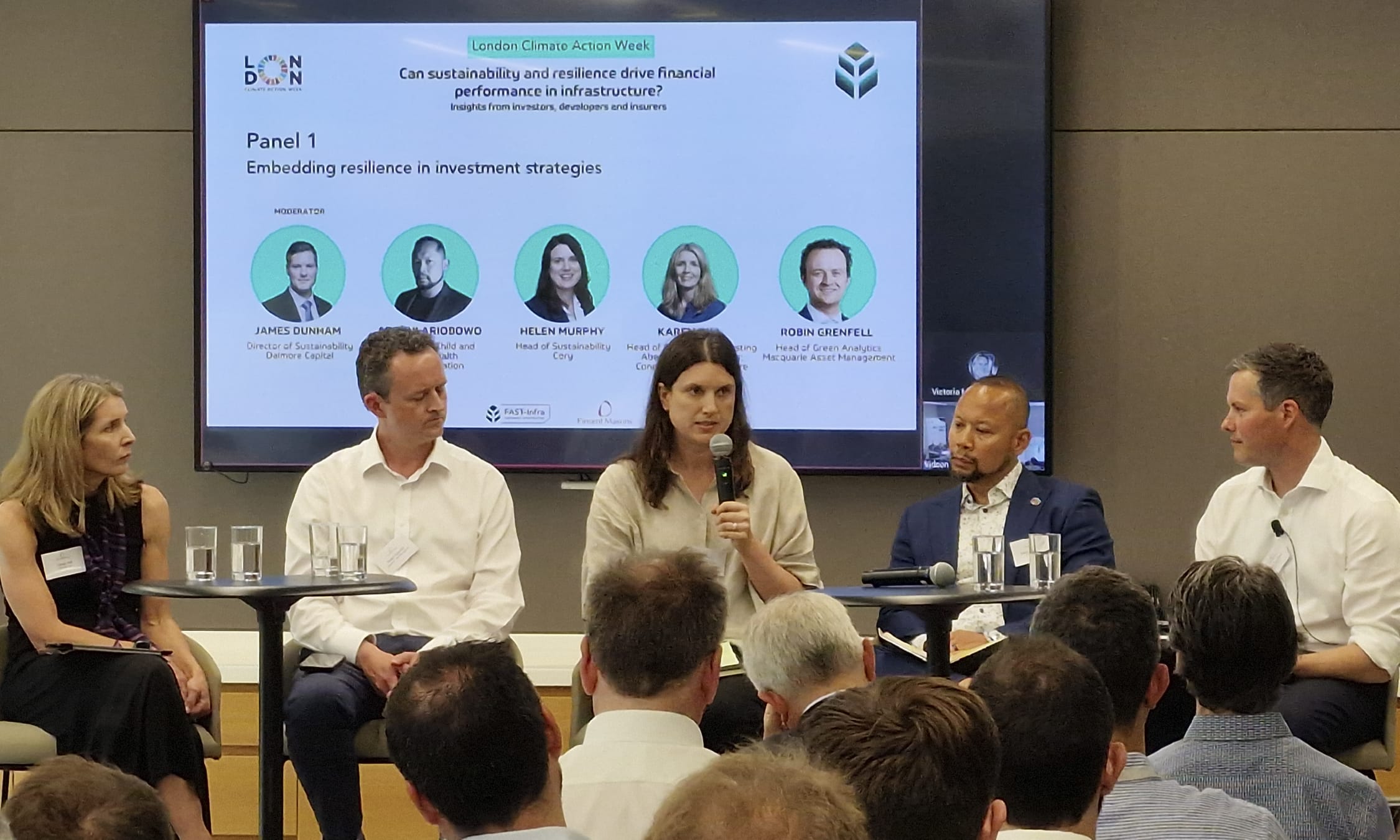
Five practical takeaways from the panel discussion
- Resilience is cheaper and more effective, the earlier it is built in. This was the single most consistent theme across the day. A report co-authored with the World Bank Global Infrastructure Facility, Underwriting the Future of Resilience, found that only 16% of insurers are currently engaged at a project's feasibility stage, and just 24% at the design stage, meaning most insurers are pricing risk decisions they had no hand in shaping.
The recommended approach was straightforward: assess, map, and embed. Assess current and forward-looking climate risk early, map specific resilience measures against that risk, and embed them into siting, design, and construction rather than bolting them on later.
- "Avoided loss" is not a compelling pitch, but value creation is. One of the sharper reframes of the day: telling an investment committee that a resilience measure prevents a loss that hasn't happened yet is a weak argument, because it shows up as nothing on a balance sheet. The stronger case is demonstrating what the investment protects or unlocks.
One example presented was a portfolio solar project that adapted its existing panel-tracking system to tilt away from hail events, reducing impact by 30 to 40% per event, at a lower cost than a protective coating, while improving its insurance terms in the process, turning a risk mitigation measure into a straightforward return-on-investment case.
- Revenue continuity matters as much as asset survival. Multiple speakers described a shift in how asset managers talk about resilience internally, from "will this asset withstand a shock" to "will the service and revenue it provides continue uninterrupted." That distinction matters because it connects resilience directly to the numbers an investment committee already cares about, rather than treating it as a separate sustainability consideration.
- Resilience does not stop at an asset's boundary. A recurring example across the day involved infrastructure that is resilient in isolation but still exposed through its surroundings, such as an EV charging station that survives a flood but sees no revenue because the roads leading to it are impassable.
This pushed the conversation toward cross-stakeholder collaboration as a practical necessity, not an aspiration: asset owners coordinating with adjacent infrastructure operators, municipalities, and insurers rather than solving resilience asset by asset.
- Safety is a part of financial performance. One discussion broadened the room's definition of resilience considerably. One road safety professional in attendance pointed out that:
Road deaths total roughly 1.19 million annually, disproportionately affecting people aged 15 to 29, yet only around 1% of global transport infrastructure investment is dedicated specifically to road safety, despite an estimated eightfold return on every dollar spent.
Other practical examples helped form a strong connection with this topic. Such as a metro network in Tianjin that saw ridership increase 85% after safety-focused redesigns, including better lighting, cycle lanes, and slower speed zones, and a bus rapid transit project in Dakar saw a 7% ridership increase translate into a 55% revenue increase after similar interventions.
The takeaway from this data was that unsafe assets carry higher disruption and higher insurance costs, which makes safety a direct input into financial performance rather than a distinct workstream.

The insurance sector's role: early warning signal and catalyst
Insurance came up as its own thread throughout the day. Insurers were described as an early warning signal already repricing and, in some cases, withdrawing cover from climate-exposed assets. But the discussion dedicated to insurance argued insurers also have the potential to accelerate investment. If underwriting and reinsurance markets adopt globally comparable frameworks to differentiate resilient from non-resilient assets, that creates a pricing signal capable of moving capital at scale.
One speaker pointed out that recent catastrophe losses show a persistent annual gap of roughly $100 billion between economic losses and insured losses. A survey of 25 global insurers also found that when climate risk management information is missing from a project, 40% of insurers apply more conservative terms, including higher deductibles and narrower coverage. In many cases, those costs could be reduced simply by sharing better information earlier in project development.
Several participants also argued that insurers and brokers should be viewed less as transactional partners and more as strategic advisors throughout the project lifecycle. Treating them as interchangeable is part of why resilience conversations sometimes stall.
Where does FAST-Infra come into the picture?
The conversations at our London Climate Action Week 2026 event reinforced a powerful message: sustainability and resilience are no longer peripheral considerations for infrastructure, they are central to financial performance, risk management and long-term value creation. In a world of escalating climate risk, tighter capital conditions, and growing demand for accountability, infrastructure markets need credible tools that can distinguish projects with genuine long-term value from those relying on ambition alone.
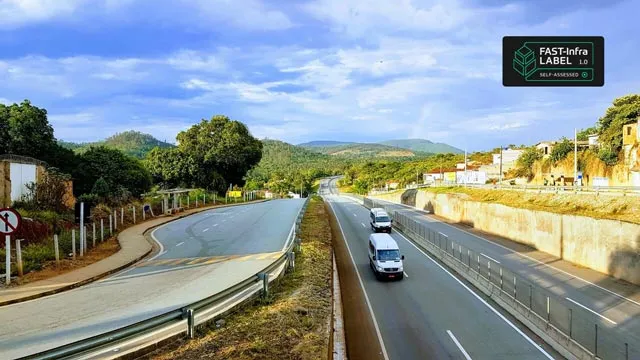
The FAST-Infra Label offers exactly this kind of market infrastructure. By applying global consistency, independent assessment, and technical rigour across the full asset life cycle, it helps governments and developers prepare and procure stronger projects, enables project sponsors to improve bankability and reporting, supports investors in screening and monitoring assets, and gives insurers better insight into resilience and risk quality. Its value lies in more than recognising sustainable infrastructure, but also in helping the market to price, finance, insure and scale it. For the insurance and infrastructure investment sectors, the opportunity is now to move from recognising climate-related risks to actively rewarding the projects that manage them well.
As Morgane Huchet, Senior Project Manager for FAST-Infra Label elaborated to the audience, "We are not just building a pipeline of projects. We are trying to build a common understanding across the market to mobilise capital at scale towards sustainable infrastructure."
Embedding frameworks such as FAST-Infra into underwriting, due diligence, portfolio construction and asset stewardship can help unlock capital for infrastructure that is more resilient and better positioned to deliver long-term financial and societal returns.
Closing reflections
The day concluded with a reminder that financial systems and physical systems are becoming increasingly inseparable. Investment horizons must begin to reflect the much longer timescales over which climate risk unfolds, and resilience creates value.
Viewed through that lens, insurance is no longer simply a mechanism for transferring risk, but rather an increasingly useful indicator of long-term asset quality and investment resilience.
FAST-Infra thanks Pinsent Masons for co-hosting, and all speakers, panellists, and attendees for a genuinely cross-sector conversation, at a moment that made the stakes impossible to ignore.
Further Reading








.webp)
.webp)


.webp)
.webp)
.webp)
.webp)
.webp)





.webp)
.webp)





To stay in the loop, subscribe to our news and updates.

