
FAST-Infra and China’s Next Infrastructure Cycle
What’s a Rich Text element?
The rich text element allows you to create and format headings, paragraphs, blockquotes, images, and video all in one place instead of having to add and format them individually. Just double-click and easily create content.
H1
H2
H3
H4
H5
H6


Static and dynamic content editing
A rich text element can be used with static or dynamic content. For static content, just drop it into any page and begin editing. For dynamic content,
add a rich text field to any collection and then connect a rich text element to that field in the settings panel. Vsadsadsdasdasdasdasdoila!
- A rich text element can be used with static or dynamic content. For static content, just drop it into any page and begin editing. For dynamic content, add a rich text field to any collection and then connect a rich text element to that field in the settings panel. Voila!
- t to that field
- t to that field
-
How to customize formatting for each rich text
How to customize formatting for each rich text
How to customize formatting for each rich text
Headings, paragraphs, blockquotes, figures, images, and figure captions can all be styled after a class is added to the rich text element using the "When inside of" nested selector system.
What’s a Rich Text element?
The rich text element allows you to create and format headings, paragraphs, blockquotes, images, and video all in one place instead of having to add and format them individually. Just double-click and easily create content.
H1
H2
H3
H4
H5
H6
Static and dynamic content editing
A rich text element can be used with static or dynamic content. For static content, just drop it into any page and begin editing. For dynamic content,
add a rich text field to any collection and then connect a rich text element to that field in the settings panel. Vsadsadsdasdasdasdasdoila!
- A rich text element can be used with static or dynamic content. For static content, just drop it into any page and begin editing. For dynamic content, add a rich text field to any collection and then connect a rich text element to that field in the settings panel. Voila!
- t to that field
- t to that field
-
How to customize formatting for each rich text
How to customize formatting for each rich text
How to customize formatting for each rich text
Headings, paragraphs, blockquotes, figures, images, and figure captions can all be styled after a class is added to the rich text element using the "When inside of" nested selector system.Summary:
The FAST-Infra Label can support the objectives of the 15th Five-Year Plan by providing a practical bridge between policy ambition and investable infrastructure delivery. By translating sustainability, resilience and governance principles into a standardised, project-level framework, it helps improve asset quality, strengthen risk management and enhance transparency. In doing so, it supports the shift towards lifecycle-based infrastructure performance, facilitates capital mobilisation through greater comparability and investor confidence, and reinforces alignment between domestic regulatory priorities and international market expectations.
China has entered the 15th Five-Year Plan (2026–2030) period, marking a structural shift in its development model. Infrastructure is increasingly seen not as a set of stand-alone projects, but as interconnected systems across energy, transport, water, digital networks and zero-carbon industrial clusters, with greater emphasis on efficiency, resilience and asset quality.
This transformation is not driven by a single policy instrument, but by the interaction of three institutional pillars: policy, regulation and delivery. First the 15th Five-Year Plan provides the macro-level direction. Second, the Environmental Code directly shapes project design and investment decisions and third, the 109 national key projects translate these priorities into implementation frameworks.
The 15th Five-Year Plan points to an evolution in infrastructure financing by emphasising the revitalisation of existing infrastructure assets, the regular issuance of infrastructure REITs, stronger investment-financing coordination, greater use of direct financing, and the development of asset securitisation markets. Together, these measures suggest a move beyond a purely build-and-spend model towards one that places greater weight on asset operation, financial structuring, and long-term performance. Within a broader push to diversify funding sources, China’s policy framework permits selective foreign ownership of infrastructure assets in some sectors, subject to regulatory restrictions.
The Chinese Environmental Code, released in March 2026, reinforces this shift. By embedding carbon constraints, environmental thresholds and liability mechanisms into the legal framework, it alters project risk profiles and feasibility conditions. These changes directly influence financing structures, cost of capital and capital allocation decisions.
Within this context, the 109 national key projects act as delivery vehicles. They are not merely a list of investments, but a structured pipeline aligned with national priorities across sectors such as energy, transport, water, digital infrastructure, finance and social services. Their development reflects the interaction of planning frameworks, sectoral standards and approval processes, ensuring that infrastructure delivery remains closely anchored to policy objectives.
Globally, this model is emerging at a critical moment. The infrastructure investment gap remains significant, while global capital pools continue to expand. The constraint is not capital availability, but the supply of investable, high-quality assets. China is one of the few economies with the institutional capacity to address this imbalance at scale. The remaining challenge lies in execution: converting policy ambition into a consistent pipeline of investable, financeable and internationally credible projects.
This is where standards such as the FAST-Infra Label can play a practical role. Developed by a coalition of more than 200 organisations across the infrastructure ecosystem representing over USD 6.3 trillion in assets under management, the Label functions as a meta-standard for sustainable and resilient infrastructure. It translates more than 55 international standards, taxonomies and guidelines into a project-level framework that supports the identification and management of sustainability and resilience risks across the full lifecycle.
In the Chinese context, the Label is not intended to sit outside the domestic regulatory architecture. Rather, it can complement it by providing a common reference point, grounded in international practice, for assessing project quality, sustainability and resilience. In doing so, it can help bridge a persistent gap between projects aligned with policy priorities and those meeting investor expectations in terms of transparency, comparability and readiness.
About the FAST-Infra Label
The FAST-Infra Label is a global labelling system that measures infrastructure projects' sustainability performances.
The Label framework is structured around 14 criteria, divided into 4 core dimensions. These are:
- Environmental
- Social
- Governance
- Adaptation and Resilience
Together, these provide a comprehensive view of asset quality, risk exposure, long-term sustainability and its positive contributions to the sustainability goals.
- Step 1: Sign up on the Application Portal
Create an institutional account on the Application Portal.
- Step 2: Access the Application Portal
Access the portal with your credentials, invite colleagues and contributors in support of the labelling process.
- Step 3: Complete the Self-assessment
Project developers or asset owners conduct a structured Self-assessment through the FAST-Infra Label Application Portal. This process identifies gaps, risks, and areas for improvement across the project lifecycle, from design to operations.
- Step 4: Earn the Self-assessment
After your project fulfils the baseline requirements and makes at least one positive contribution to one of the 14 criteria, it automatically earns the Self-assessed Label.
- Step 5: Third-party verification
The project is then eligible to undergo third-party verification by accredited independent bodies. This step ensures credibility, consistency and alignment with international best practices. Once verified, projects receive the FAST-Infra Label. At the same time, the process generates structured, standardised data that financiers and stakeholders can use for benchmarking and reporting.
Translating policy ambition into investable assets
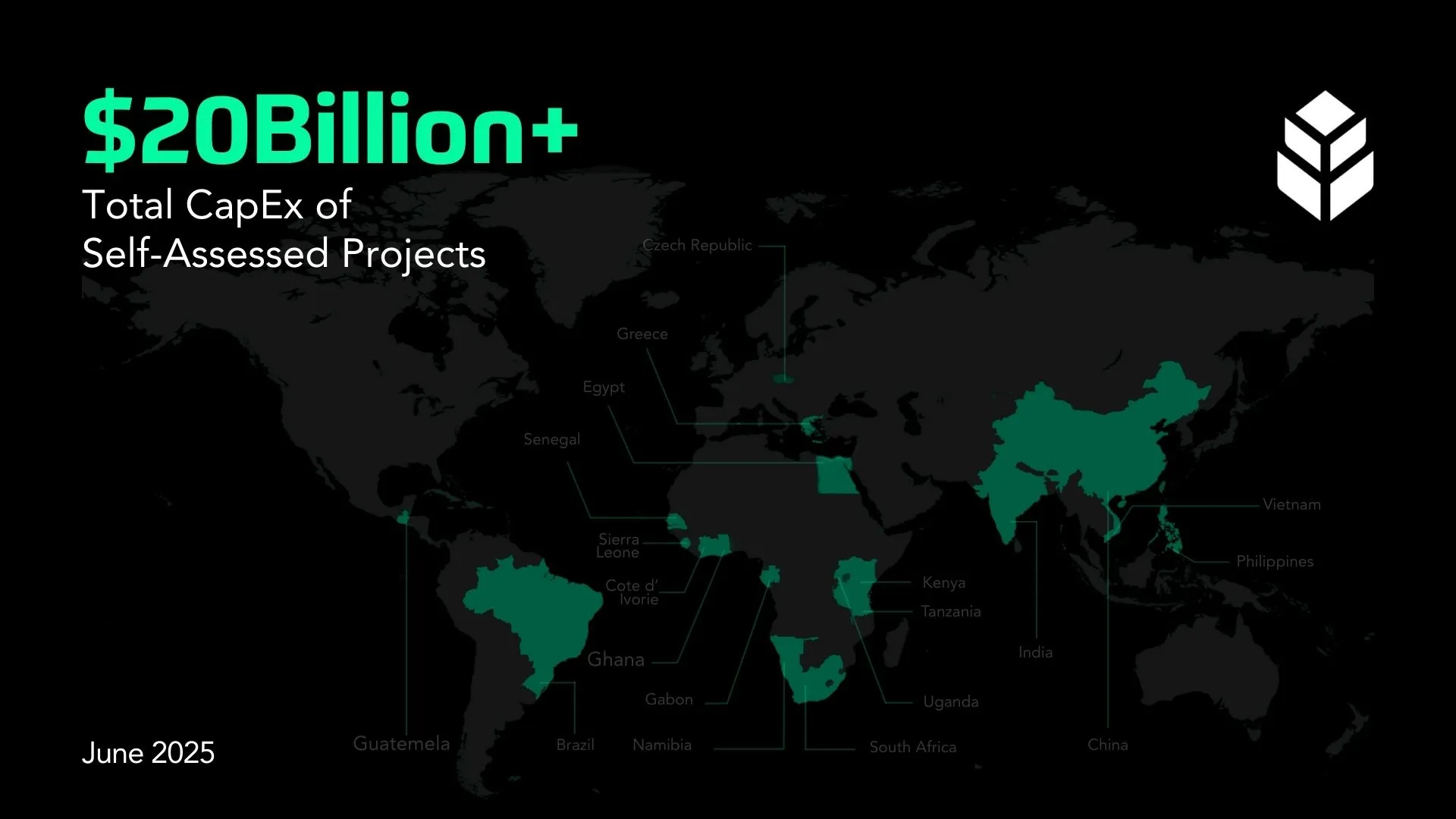
Used by more than 300 infrastructure assets across over 25 countries, and adopted by financiers, governmental agencies, project developers and project preparation facilities, the FAST-Infra Label provides a structured interface between policy frameworks and financial markets. Its value becomes most apparent in three areas.
1. Capital mobilisation and improved financial structuring
The 15th Five-Year Plan calls for deeper capital market development, expanded use of green finance instruments and increased participation of private capital. Delivering on these objectives requires projects to be structured as long-term, investable assets rather than as stand-alone construction activities.
The Label supports this transition by offering a shared framework for assessing sustainability and resilience at project level. For financiers, it introduces standardised data templates to support sustainability and resilience information disclosure, improving data comparability and enhancing transparency. This facilitates more consistent evaluation across policy banks, commercial lenders, institutional investors and capital markets.
At the same time, by strengthening early-stage risk identification and project structuring, the Label contributes to improving the overall quality of the asset base. This combination can help expand the pool of capital available to priority infrastructure and support a shift towards asset-based financing and capital recycling mechanisms.
2. Project quality, risk management and capacity building
China’s policy framework increasingly emphasises lifecycle performance, environmental integrity and resilience. Many of the risks that ultimately determine project outcomes are embedded early in the development process, including site selection, technical design, emissions profile and exposure to climate and environmental stressors.
Applied at origination and appraisal stages, the FAST-Infra Label framework introduces a structured approach to identifying and managing these risks. It supports more robust project preparation, improves alignment with regulatory requirements and enhances long-term asset performance.
An important dimension is capacity building. The Label’s Secretariat offers training programmes and technical support that enable developers, public authorities and financial institutions to apply sustainability and resilience principles in practice. This helps embed consistent methodologies across the project pipeline, reducing variability in quality and strengthening institutional capability over time.
3. Transparency, international credibility and market visibility
As China’s infrastructure market becomes more exposed to a wider range of investors, transparency and comparability become increasingly important. The Environmental Code already signals a stronger emphasis on disclosure, accountability and public participation.
The FAST-Infra Label complements this direction by providing a framework that is legible to international investors and institutions. A common standard enhances comparability across assets and jurisdictions, making projects easier to assess, benchmark and finance.
Beyond technical alignment, this contributes to international credibility and visibility. Projects that can demonstrate alignment with best global practices are better positioned to access diverse sources of capital, including development finance institutions, international lenders and sustainable finance markets. In this sense, the Label can help translate domestic policy strength into externally recognised investment quality.
From policy architecture to global benchmarks
China has already defined a clear direction for its next infrastructure cycle. The 15th Five-Year Plan and the Environmental Code articulate an ambition for infrastructure that is more sustainable, more resilient, better governed and more transparent.
The challenge now is not direction, but delivery at scale and with consistency. This requires not only strong policy frameworks, but also mechanisms that ensure project quality, comparability and financial credibility across a large and diverse pipeline.
Labelling systems such as the FAST-Infra Label can support this transition by acting as a bridge between policy intent and market expectations. By improving project preparation, strengthening asset quality and enhancing transparency, they can help accelerate capital allocation towards infrastructure that meets both domestic priorities and international standards.
Over time, this has broader implications. More efficient capital allocation can unlock additional investment at scale, while higher-quality infrastructure can deliver more durable economic, social and environmental outcomes. In that sense, the opportunity extends beyond financing. It is about shaping an infrastructure system that not only attracts capital but also expands its benefits to people and the planet, while reinforcing China’s position as a global reference point for sustainable and resilient infrastructure development.
Article created by
Global Infrastructure Basel Foundation,
FAST-Infra Label and
Greetec
About the FAST-Infra Group
FAST-Infra Group is a permanent multi-stakeholder non-profit association incorporated in France in 2022 to effectively implement the FAST-Infra community efforts and deliver concrete results. FAST-Infra Group brings together national and substate, private corporate and financial, multilateral, and civil society institutions to promote all concrete and inclusive solutions contributing to the development and improvement of sustainable, affordable and inclusive infrastructure services. FAST-Infra Group aims to make sustainable infrastructure a mainstream and liquid asset class, to integrate sustainability into the life cycle of infrastructure projects, and to attract private investment on the scale and pace required by the United Nations Sustainable Development Goals and the Paris Agreement, in alignment with the G20 Principles for Quality Infrastructure Investment (QII Principles).
About Global Infrastructure Basel Foundation (GIB)
GIB is a Swiss foundation based in Basel, working to accelerate a mainstream transition to sustainability and resilience in infrastructure around the world. Active since 2008, we work with stakeholders across the infrastructure value chain from city and national government to project developers and infrastructure financiers. GIB implements impactful programs to drive change in the sector and has core competencies in setting standards for sustainable and resilient infrastructure.
About Greetec
Greetec Co., Ltd. (Stock Code: 920208.BJ) is a leader in China’s infrastructure evaluation and consulting industry, and the nation’s first listed company dedicated to engineering investment control. Greetec provides in-depth support for major national construction projects, serving pillar sectors of the national economy such as energy, industry, communications, transportation, municipal utilities and water conservancy, and also actively participates in the investment and development of new infrastructure, strategic emerging industries and urban renewal initiatives, helping projects enhance management performance across cost, quality, schedule, ESG and other key dimensions.
Further Reading










.webp)
.webp)

.webp)
.webp)
.webp)
.webp)
.webp)









.webp)
.webp)




To stay in the loop, subscribe to our news and updates.

