

Leveraging Digital Technology for Sustainable Infrastructure Asset Management
What’s a Rich Text element?
The rich text element allows you to create and format headings, paragraphs, blockquotes, images, and video all in one place instead of having to add and format them individually. Just double-click and easily create content.
H1
H2
H3
H4
H5
H6


Static and dynamic content editing
A rich text element can be used with static or dynamic content. For static content, just drop it into any page and begin editing. For dynamic content,
add a rich text field to any collection and then connect a rich text element to that field in the settings panel. Vsadsadsdasdasdasdasdoila!
- A rich text element can be used with static or dynamic content. For static content, just drop it into any page and begin editing. For dynamic content, add a rich text field to any collection and then connect a rich text element to that field in the settings panel. Voila!
- t to that field
- t to that field
-
How to customize formatting for each rich text
How to customize formatting for each rich text
How to customize formatting for each rich text
Headings, paragraphs, blockquotes, figures, images, and figure captions can all be styled after a class is added to the rich text element using the "When inside of" nested selector system.
What’s a Rich Text element?
The rich text element allows you to create and format headings, paragraphs, blockquotes, images, and video all in one place instead of having to add and format them individually. Just double-click and easily create content.
H1
H2
H3
H4
H5
H6
Static and dynamic content editing
A rich text element can be used with static or dynamic content. For static content, just drop it into any page and begin editing. For dynamic content,
add a rich text field to any collection and then connect a rich text element to that field in the settings panel. Vsadsadsdasdasdasdasdoila!
- A rich text element can be used with static or dynamic content. For static content, just drop it into any page and begin editing. For dynamic content, add a rich text field to any collection and then connect a rich text element to that field in the settings panel. Voila!
- t to that field
- t to that field
-
How to customize formatting for each rich text
How to customize formatting for each rich text
How to customize formatting for each rich text
Headings, paragraphs, blockquotes, figures, images, and figure captions can all be styled after a class is added to the rich text element using the "When inside of" nested selector system.The rapid advancement of digital technologies has significantly reshaped the landscape of infrastructure management. Tools such as IoT sensors, Artificial Intelligence, blockchain, cloud communication, and digital twin systems have enabled more sophisticated approaches to monitoring, operating, and optimizing infrastructural assets.
In this conversation, Efrain Tamayo reflects on the role of digital innovation in asset management, the importance of cross-sector coordination, and how frameworks such as the FAST-Infra Label can enhance transparency, standardization, and long-term resilience in infrastructure systems.
How are digital technologies enhancing infrastructure, and what major future breakthroughs are expected?
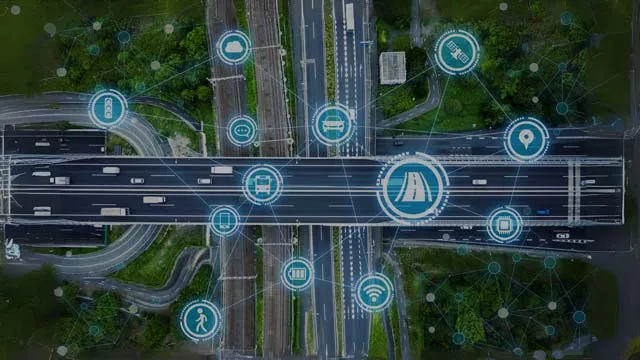
Digital technologies have evolved to support core functions such as data collection, connectivity, and computation across a wide range of asset classes. These tools enable continuous monitoring of both static and dynamic infrastructure, improving visibility into performance and operational conditions.
As a result, the ability to optimize, control, and predict asset functionality has improved substantially. Management processes have become more efficient, response times have shortened, and identifying complications or errors has become significantly easier. This has strengthened the overall reliability and performance of infrastructural systems.
What is Hitachi’s role in digital coordination across sectors, and how does it help prevent cascading failures and improve system reliability?
Hitachi has developed digital systems that enhance asset monitoring and operational optimization, contributing to more efficient and reliable infrastructure management. These technologies support effective risk management by enabling faster detection and resolution of issues.
The company has also emphasized the importance of cross-sector coordination, recognizing that interconnected infrastructure systems require integrated approaches. Digital tools play a key role in enabling such coordination and improving overall system performance and resilience.
How can project developers and policymakers better account for interdependencies between infrastructure systems?
Addressing interdependencies requires a systems-thinking approach from the early stages of planning and design. Integration across sectors should be carefully mapped, with consideration given to future developments, technological evolution, and the changing condition of assets over time.
Collaboration must be supported by effective knowledge sharing among stakeholders to encourage interaction across different asset classes. In addition, resilience should be strengthened through stress testing, while digital technologies can support early detection and rapid response mechanisms. Together, these elements create the conditions necessary for managing interconnected infrastructure systems effectively.
How do digital technologies support credible, data-driven sustainability assessments and improve transparency with frameworks such as the FAST-Infra Label?
Digital technologies enable more precise monitoring, control, and operation of infrastructural assets, supporting the adoption of sustainable practices and improving resilience. These capabilities enhance transparency and reliability in standardized frameworks such as the FAST-Infra Label by allowing accurate communication of performance metrics, outcomes, and risk exposure. Greater transparency also facilitates the exchange of information among stakeholders, strengthening trust and encouraging broader engagement in sustainable infrastructure development.
In this context, the FAST-Infra Label serves as an effective framework, enabling stakeholders to better understand asset performance, optimization potential, and interoperability across sectors. By supporting clearer communication and enhanced digital capabilities, the label helps to streamline capital mobilization and infrastructure deployment.
Further Reading
























.webp)

.webp)


.webp)
.webp)
.webp)
.webp)
.webp)










.webp)
.webp)





To stay in the loop, subscribe to our news and updates.

