
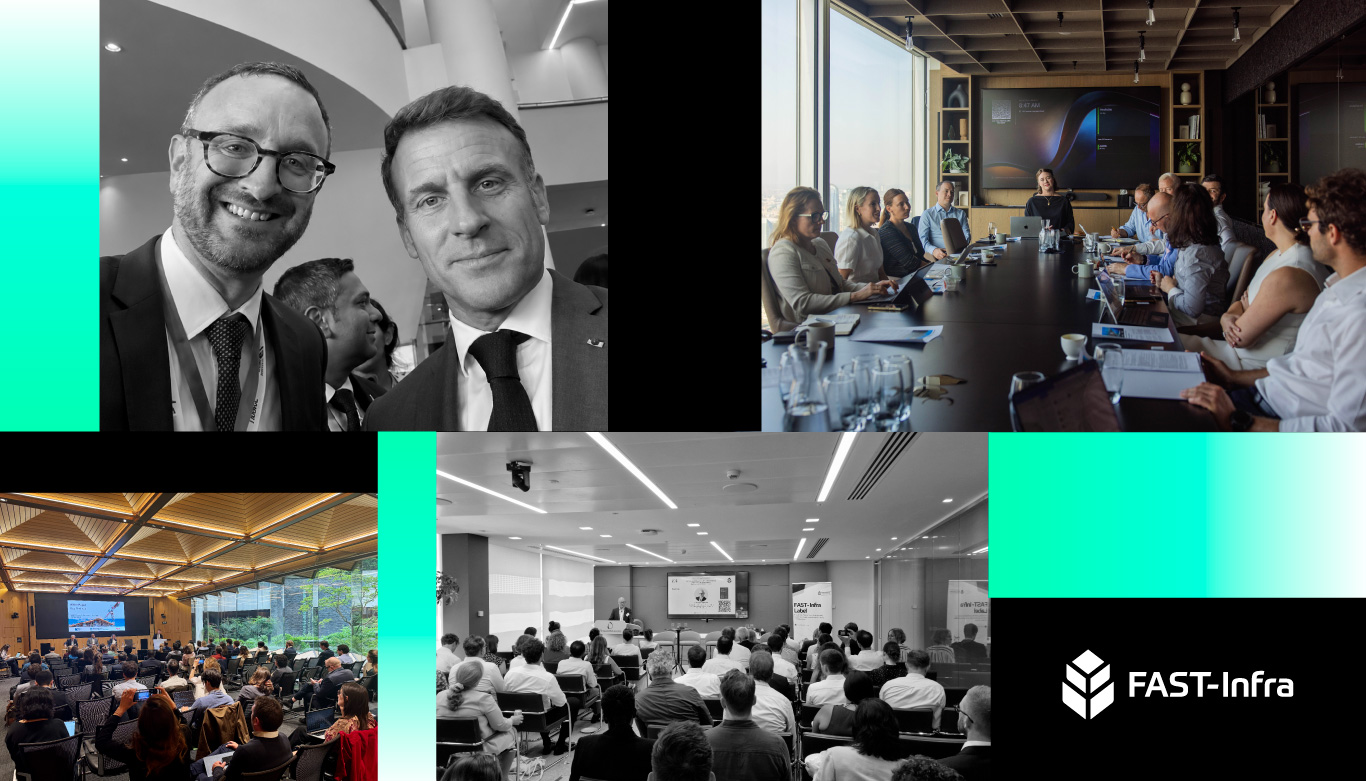
FAST-Infra Review | H1 2026: From Awareness to Adoption
What’s a Rich Text element?
The rich text element allows you to create and format headings, paragraphs, blockquotes, images, and video all in one place instead of having to add and format them individually. Just double-click and easily create content.
H1
H2
H3
H4
H5
H6


Static and dynamic content editing
A rich text element can be used with static or dynamic content. For static content, just drop it into any page and begin editing. For dynamic content,
add a rich text field to any collection and then connect a rich text element to that field in the settings panel. Vsadsadsdasdasdasdasdoila!
- A rich text element can be used with static or dynamic content. For static content, just drop it into any page and begin editing. For dynamic content, add a rich text field to any collection and then connect a rich text element to that field in the settings panel. Voila!
- t to that field
- t to that field
-
How to customize formatting for each rich text
How to customize formatting for each rich text
How to customize formatting for each rich text
Headings, paragraphs, blockquotes, figures, images, and figure captions can all be styled after a class is added to the rich text element using the "When inside of" nested selector system.
What’s a Rich Text element?
The rich text element allows you to create and format headings, paragraphs, blockquotes, images, and video all in one place instead of having to add and format them individually. Just double-click and easily create content.
H1
H2
H3
H4
H5
H6
Static and dynamic content editing
A rich text element can be used with static or dynamic content. For static content, just drop it into any page and begin editing. For dynamic content,
add a rich text field to any collection and then connect a rich text element to that field in the settings panel. Vsadsadsdasdasdasdasdoila!
- A rich text element can be used with static or dynamic content. For static content, just drop it into any page and begin editing. For dynamic content, add a rich text field to any collection and then connect a rich text element to that field in the settings panel. Voila!
- t to that field
- t to that field
-
How to customize formatting for each rich text
How to customize formatting for each rich text
How to customize formatting for each rich text
Headings, paragraphs, blockquotes, figures, images, and figure captions can all be styled after a class is added to the rich text element using the "When inside of" nested selector system.This is the first in a new series: the FAST-Infra Review, a quarterly look at the partnerships, standards, and milestones shaping FAST-Infra activities and initiatives. This inaugural edition covers the first half of the year, spanning both Q1 and Q2 2026, and future editions will follow each quarter.
In the first half of 2026, FAST-Infra shifted from making the case for standardisation to proving it works. We spoke at policy forums in Istanbul, Berlin, Paris, and Shanghai; met with government delegations in Chișinău and Dakar; and shared a stage with bankers, insurers, and engineers in London. We also grew through partners who already have the relationships and reach in their own markets, rather than by building out our own local presence everywhere at once, and two new tripartite partnerships now carry FAST-Infra into the Gulf, MENA, and Türkiye. Here's where six months of that work took us, and who joined us along the way.
The Label at the halfway point of 2026
On 27 January, FAST-Infra's Steering Committee reviewed the Label's progress, closed out its 2023 to 2025 phase, and approved a new three-year strategy. The moment is worth pausing on, because the numbers tell a genuinely good story.
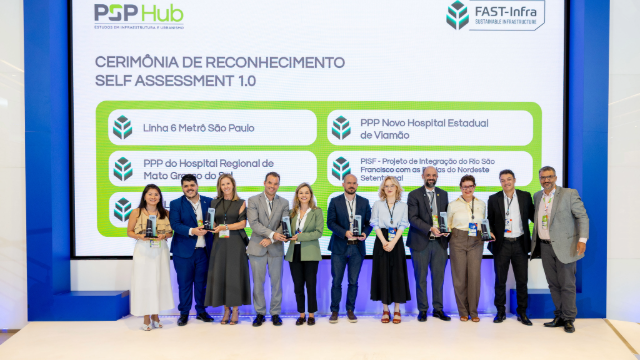
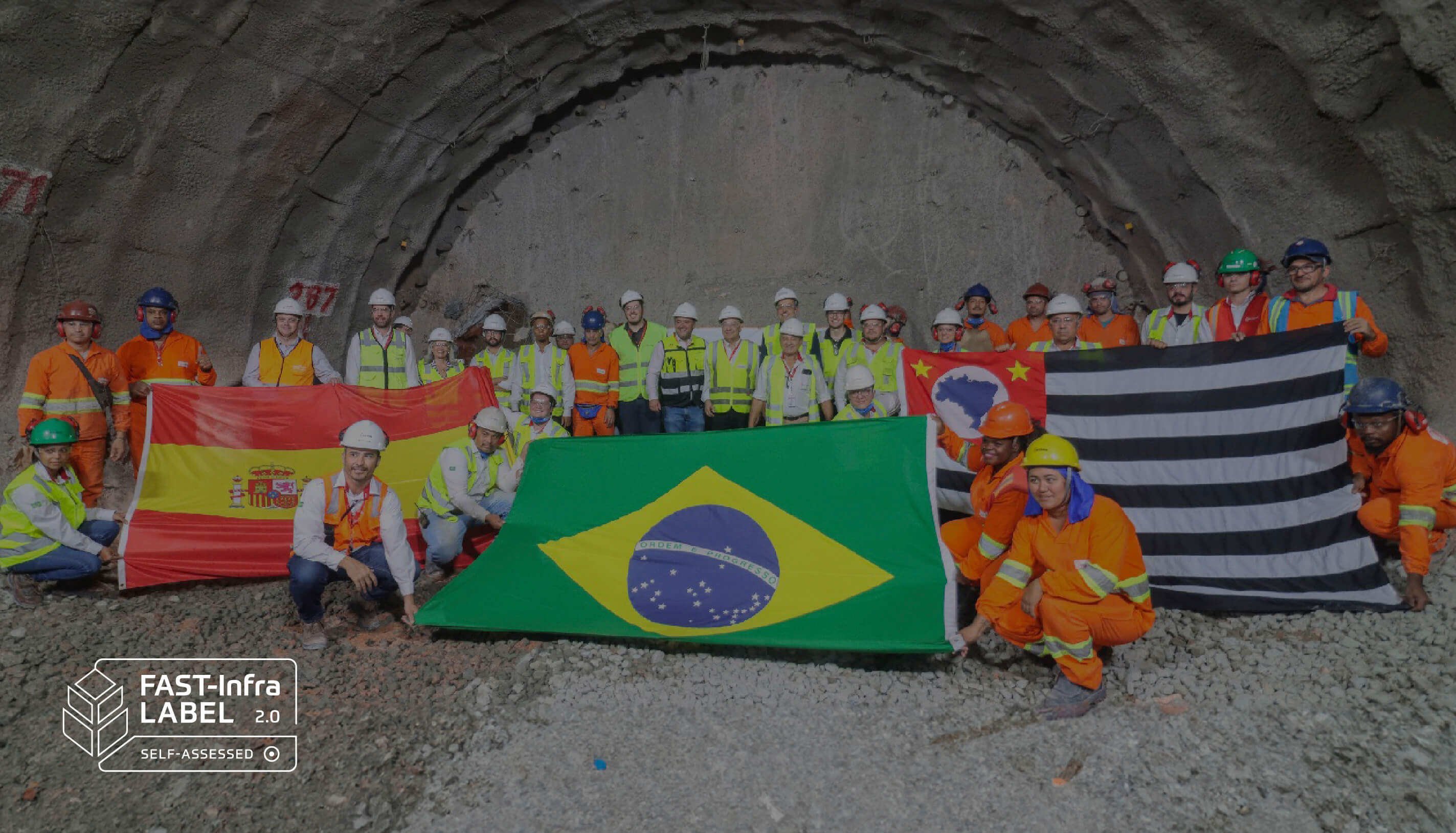
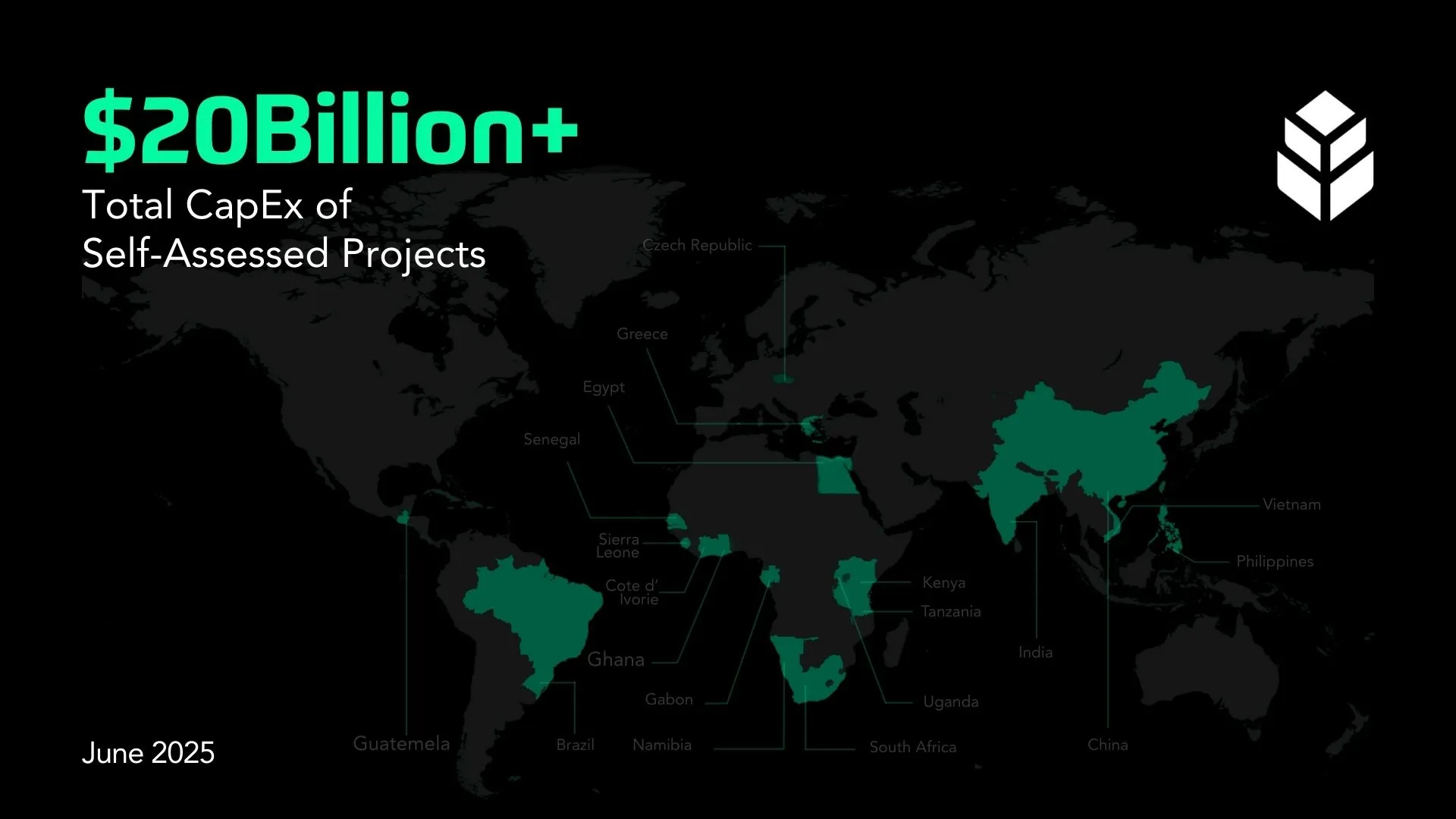
By the end of 2025, 78 projects across 34 countries, representing around USD 27 billion of infrastructure, had completed the FAST-Infra Label's self-assessment process, and registrations on our Bloomberg-hosted portal ran ahead of target. Since then, in Q1 and Q2 of 2026, an additional 146 projects were labelled. In addition, the FAST-Infra Label is now written into Dalmore Capital's Responsible Investment Policy, into the terms of reference of the Inter-American Development Bank's PPP unit, into the legal structuring of two Brazilian PPP projects, and it's publicly referenced by the Singapore-based debt platform Pentagreen. That's a Label moving from pilot to structural adoption.
In February, we released Version 2.0 of the Label framework. The Steering Committee also set a clear target for what comes next: 1,000 projects by 2028, concentrated in five priority regions spanning Western Europe, South Asia, Eastern Europe and Central Asia, Latin America, and China. The Committee put the shift in emphasis simply: from social proof to transaction proof, building the concrete cases where the Label demonstrably helped a project reach financial close. Converting self-assessments into independent, third-party verifications is where that value proposition gets tested, and it's the Secretariat's priority for the year ahead.
Meeting the sector where it works
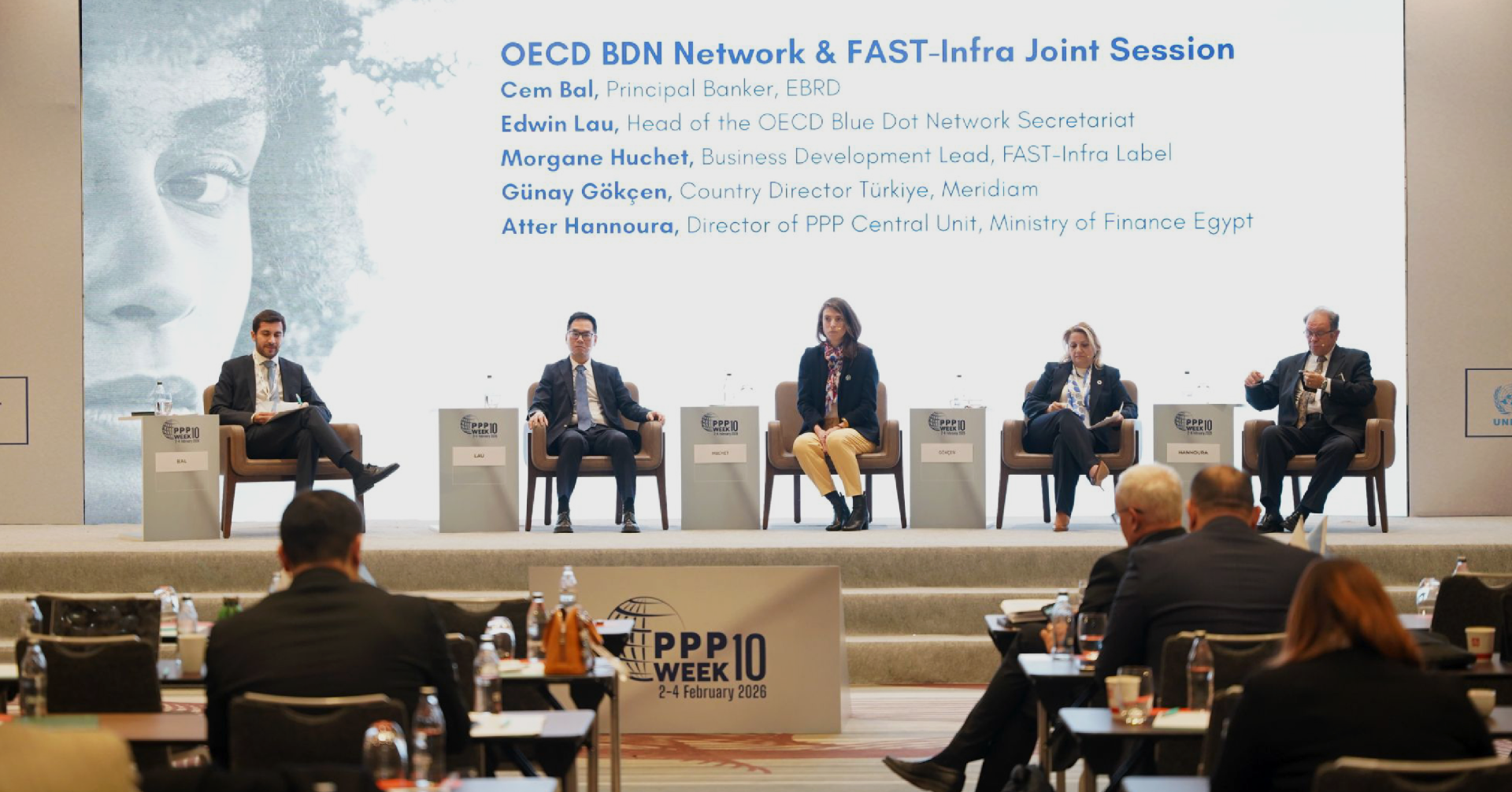
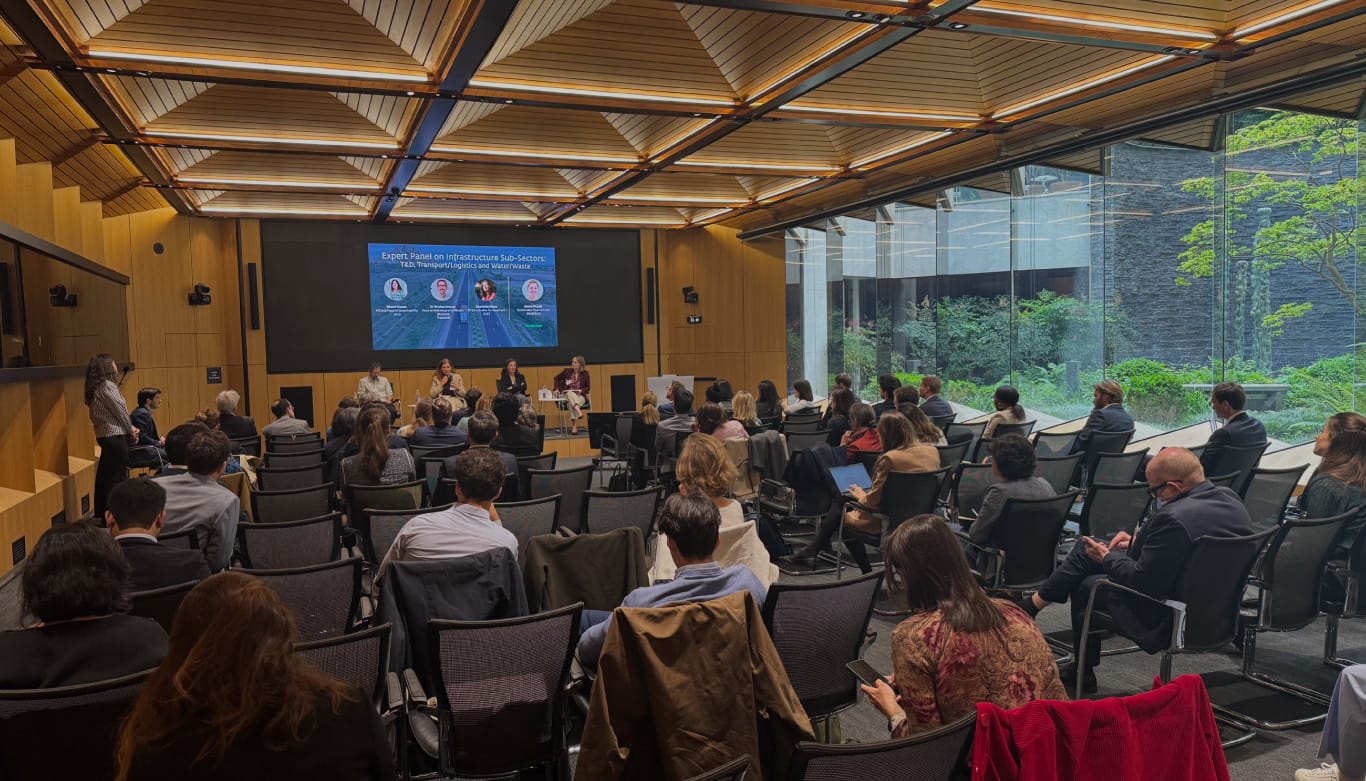
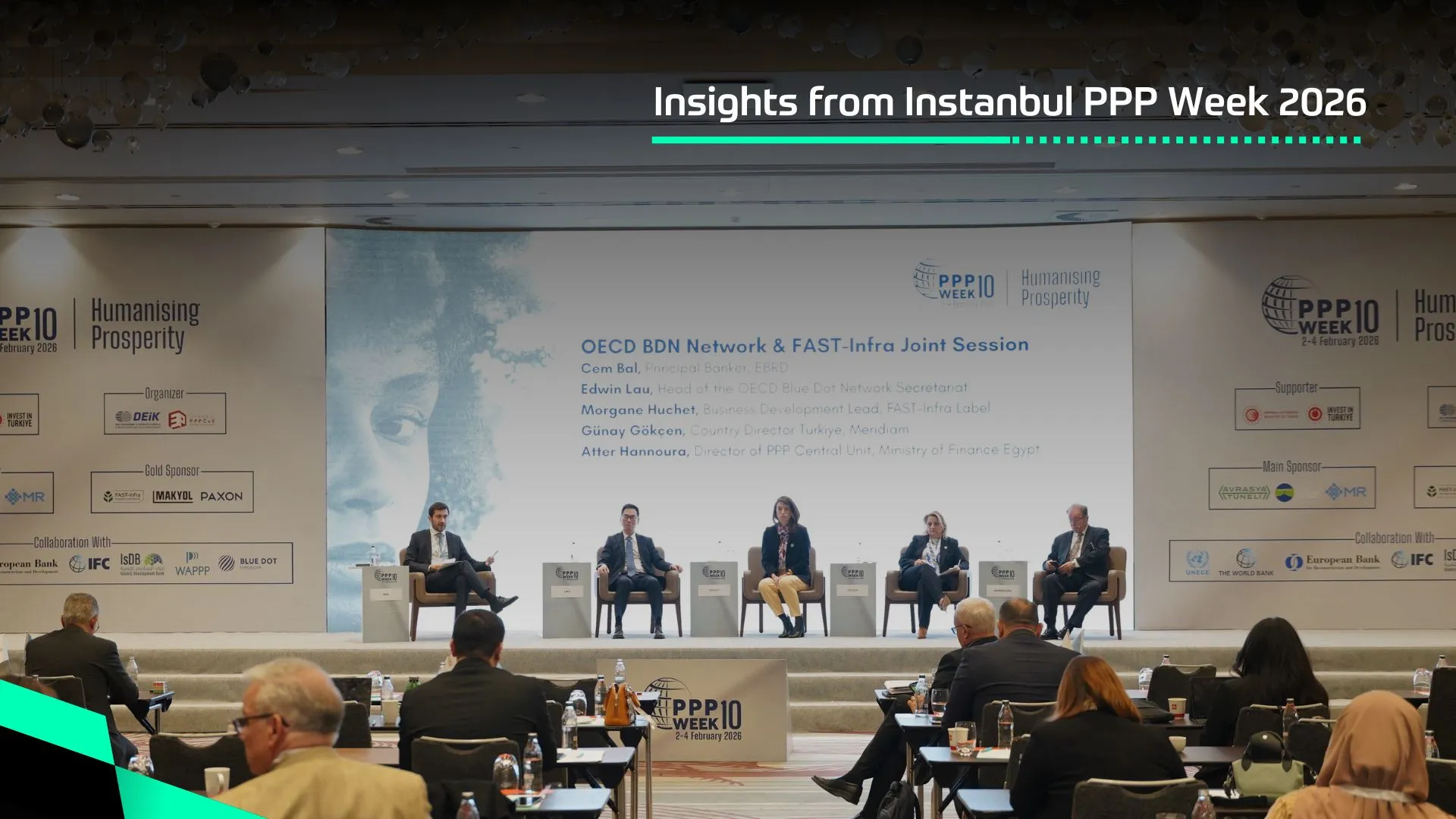
We opened the year in Istanbul, at the tenth Istanbul PPP Week, with a joint session alongside the Blue Dot Network, the OECD-hosted, government-backed certification scheme that's the closest peer to our own Label. This event was chaired by the EBRD, in front of 150 people. Edwin Lau, who heads the Blue Dot Network Secretariat, joined our own Morgane Huchet and PPP officials from Egypt and Türkiye. One panel looked at how to embed sustainability into PPP project design, using Egypt's 10th of Ramadan dry port PPP as a working example; a second brought the Blue Dot Network and FAST-Infra together to share white paper findings. That session set in motion the tripartite memorandum of understanding we have gone on to sign with GIB and the Istanbul PPP Centre of Excellence in May.
By late March, we were in Berlin for the Infrastructure Investor Global Summit, where we put resilience at the centre of two sessions: a fireside chat with the Blue Dot Network on how infrastructure standards drive investment performance, and a main-stage panel on managing risk that we titled, "You can't control the (head) winds, but you can adjust your sails." Both aimed to give the market a clear signal that standardisation is now essential.
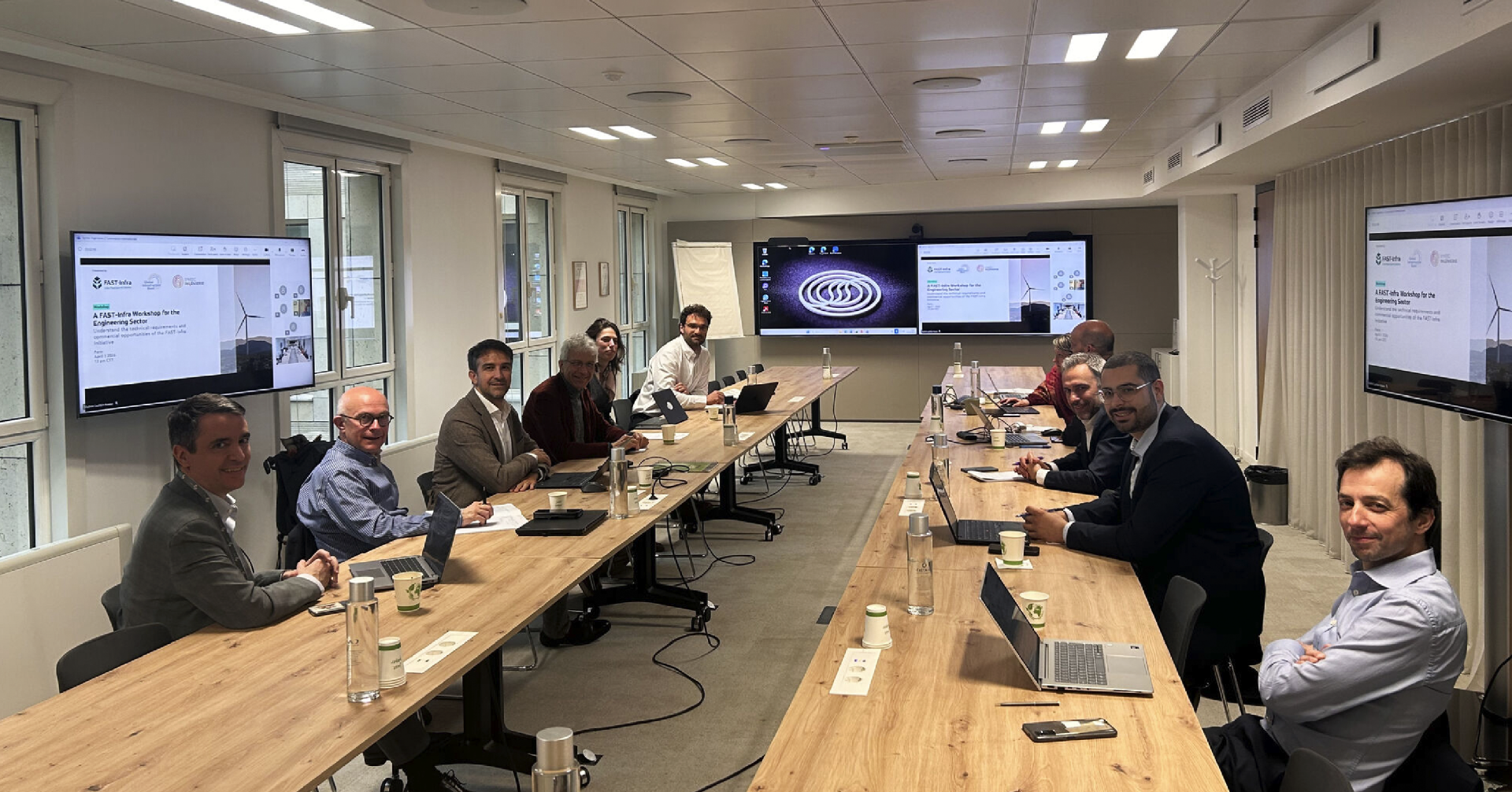
We opened April in Paris with Syntec-Ingénierie, the professional body representing France's engineering sector, which unites hundreds of consulting, construction, and industrial firms and represents more than 100,000 engineering professionals. Building on an earlier session together, we walked its international working group through what joining the FAST-Infra Group means in practice, how the Label's verification process lines up with the EU Taxonomy, and what a common set of sustainability criteria for engineering firms would actually need to look like to be workable at project level. As FAST-Infra's global adoption grows, we see a natural role for the engineering sector in shaping how sustainability standards are applied at the project level.
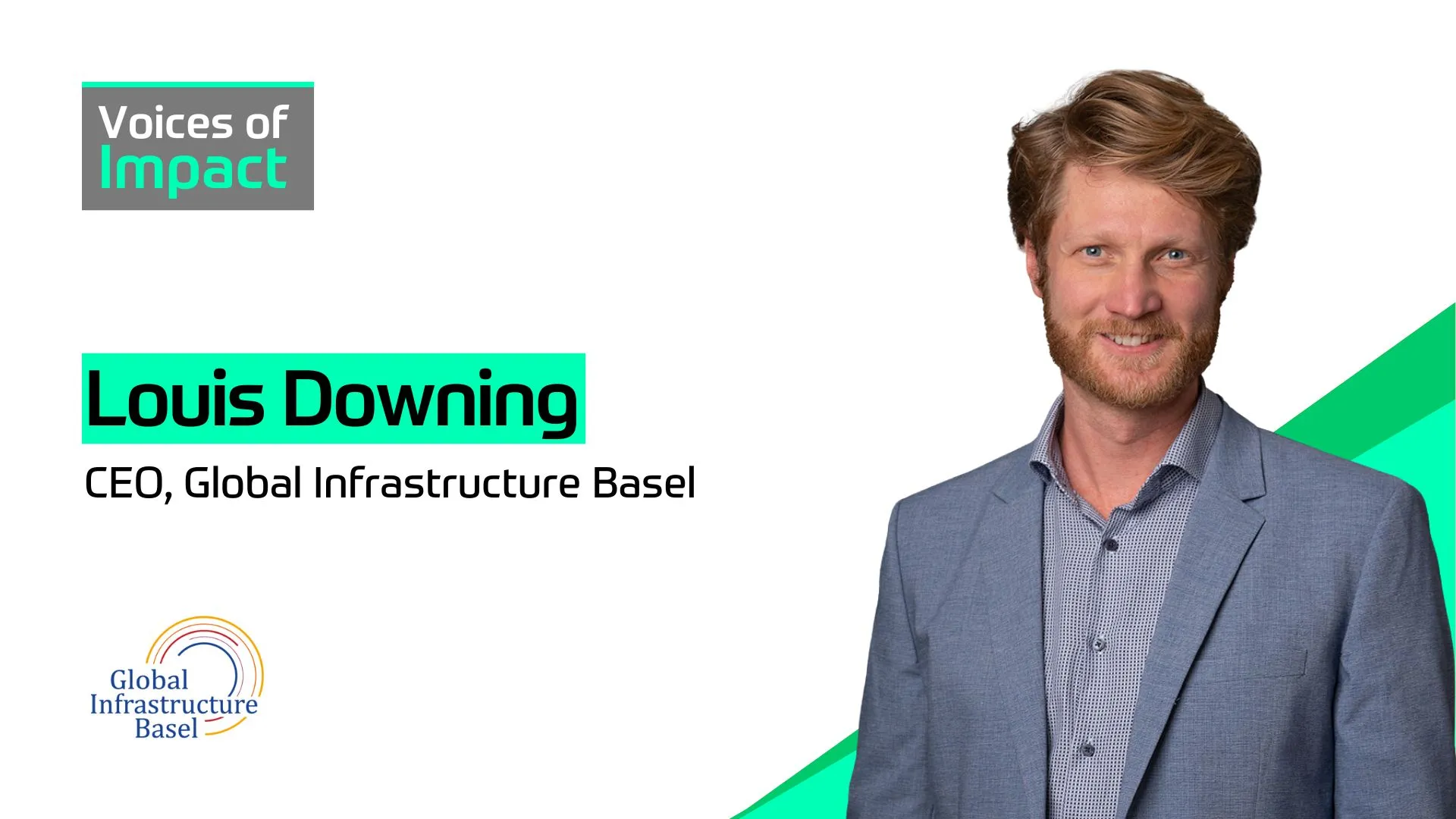
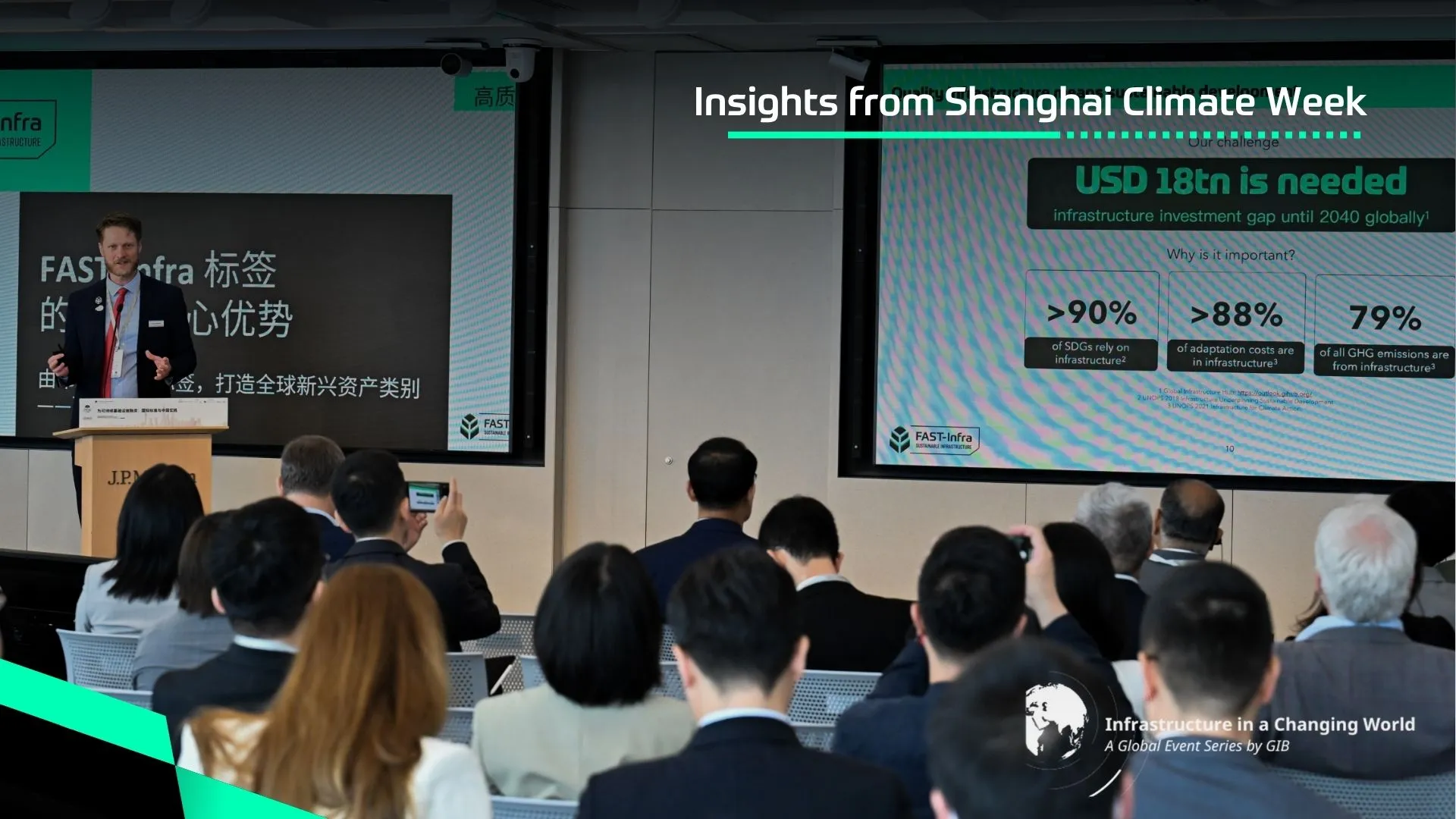
That same month, Louis Downing, Chief Executive Officer of Global Infrastructure Basel Foundation, the FAST-Infra Label secretariat, took the stage in Shanghai for a joint session with the Blue Dot Network, putting the FAST-Infra Label before an audience of around 60 and helping raise its profile in the Chinese market.
Three weeks after Syntec, we teamed up with France's Directorate General of the Treasury for a webinar on financing sustainable infrastructure in Moldova. The timing was ideal, as Moldova finished screening all 33 chapters of its EU accession negotiations in September 2025 and is now drawing on the EU's EUR 1.9 billion Growth Plan, with nearly 400 infrastructure projects underway or planned by 2026 and more than half of them in the capital, Chișinău. Aligning a pipeline of that size with a recognised international standard early is considerably cheaper than retrofitting it later, and that was the case we made. Twenty people joined, most of them from outside our own team, including the Deputy Director General of Moldova's Public Property Agency, a representative of the Ministry of Environment, the French Embassy, and FIN INFRA. The dialogue with our Moldovan counterparts was forward-looking: the Public Property Agency signalled real interest in exploring joint PPP projects, the Ministry of Environment confirmed that our approach aligns with its green finance strategy, and the National Bank of Moldova is now talking with us about joining the FAST-Infra Group.
Around the same time, at the World Bank and IMF (International Monetary Fund) Spring Meetings in Washington, DC, we joined a dedicated workshop on resilience and standardisation, keeping that conversation alive between the bigger set-piece events.
Much of what we brought to that wider conversation traces back to January, when our Insurability Working Group, chaired by Alexandre Chavarot and drawing members from Munich Re, Aon, AXA Climate, Howden, Macquarie, and S&P, closed out its first phase of work. Its central finding ran against the obvious assumption: practitioners wanted qualitative indicators- the type of insurance coverage in place, claims history, and the direction of travel on premiums-over quantitative scoring. The Macquarie Insurance Facility is now testing the resulting question set against two live case studies, piloted first in renewables.
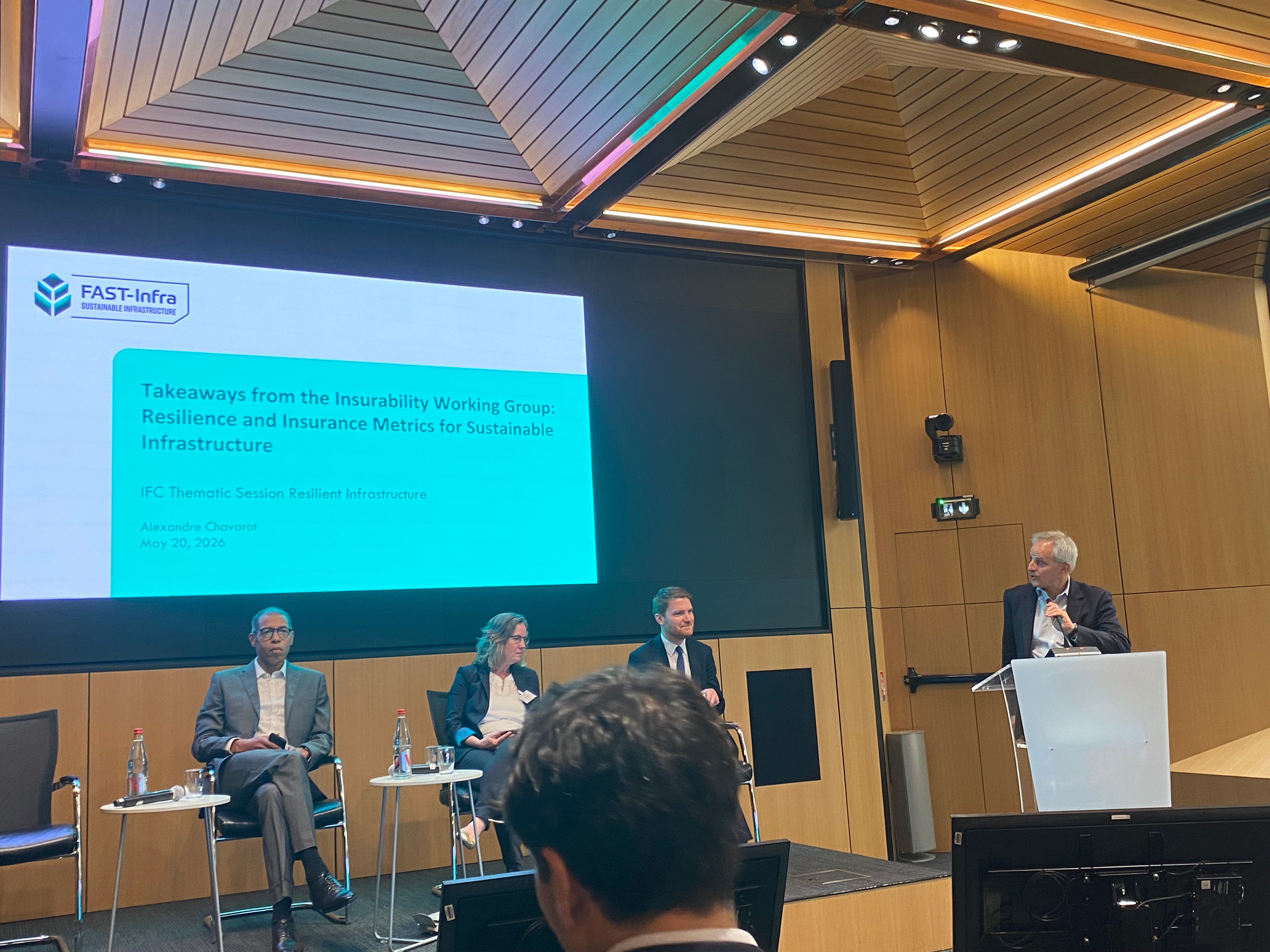
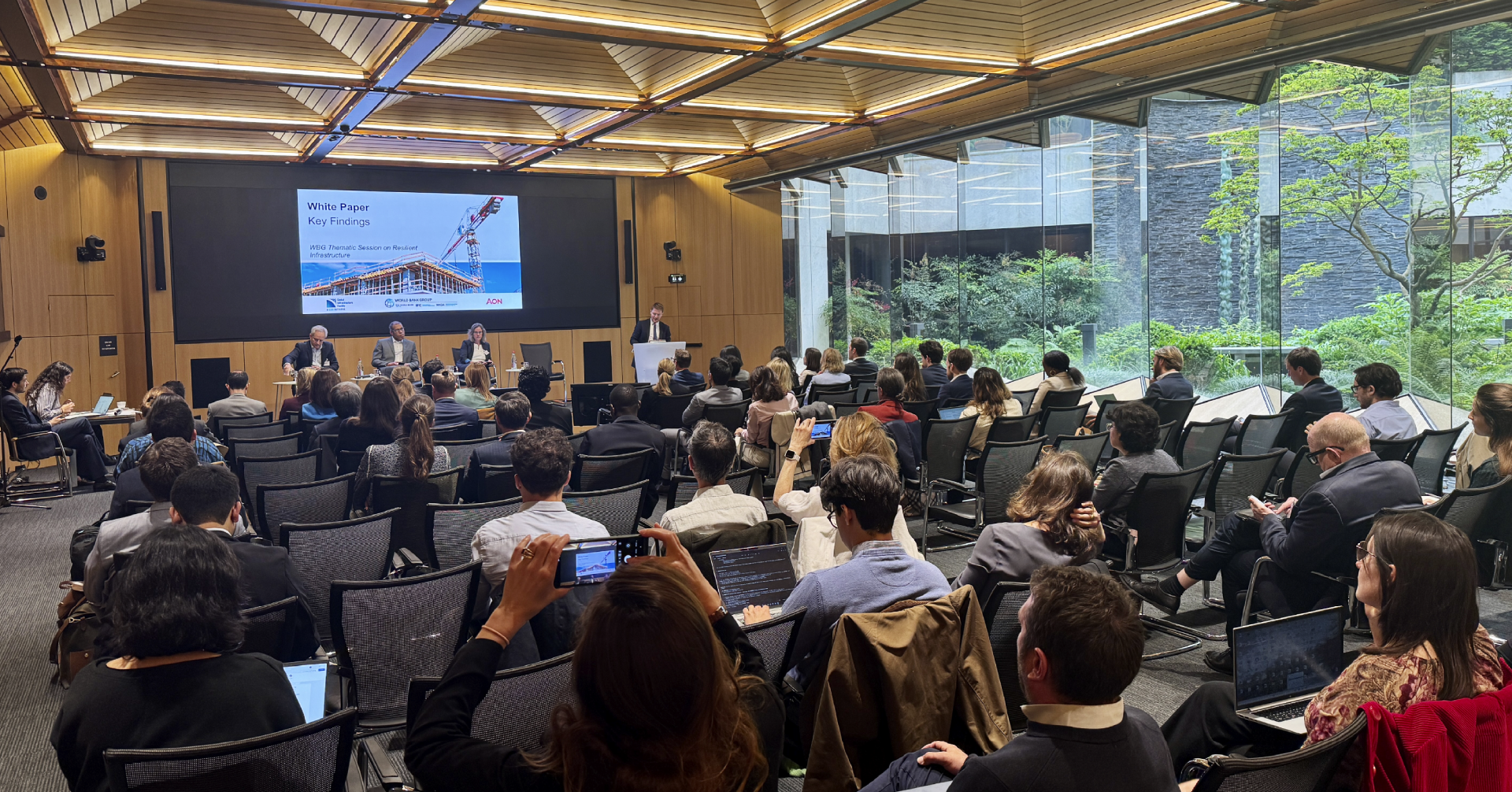
In May, we joined the World Bank Group and AXA Climate's thematic session on resilient infrastructure in Paris, in front of about 100 people, including the IFC, MIGA, the Global Infrastructure Facility, insurers, reinsurers, infrastructure funds, ratings agencies, and the World Bank Group's own Chief Economic Adviser for Climate, Stéphane Hallegatte. We brought the Insurability Working Group's early conclusions into the room, along with two reports that clarify the underlying economics. IFC, AXA Climate, and Scientific Climate Ratings released "Low Cost, High Yield" in June: it puts the cost of natural hazards to low- and middle-income countries at around USD 390 billion a year, with climate risks threatening 43 million jobs across 49 countries by 2050, and finds that Brazilian resilience measures costing between 2.4% and 8% of a project's asset value protected up to USD 8.60 in asset value for every dollar spent. A companion white paper from the Global Infrastructure Facility, IFC, MIGA, and Aon, "Underwriting the Future of Resilience," surveyed 25 global insurers and found that 84% consistently use site-specific hazard data, yet only 36% offer any explicit incentive for resilience measures. Shared resilience and insurability metrics, exactly what we're building into the Label, would close that gap: they would let insurers price risk accurately, keep premiums reasonable, and give everyone in a deal the same starting point.
Two weeks after that, we were back online with the Syndicat des énergies renouvelables (SER), France's renewable energy trade association founded in 1993, representing more than 500 companies, about two-thirds of them SMEs and mid-caps, across solar, wind, hydro, geothermal, biomass, and marine energy. More than 70 people joined to hear how the Label speeds up due diligence for renewable projects, and the conversation opened up SER's potential role as co-chair of a future FAST-Infra working group on guarantees. We look forward to welcoming new voices from the SER community.
In June we spoke with the International Development Finance Club (IDFC), a network of 27 national and regional development banks that, by its own account, holds USD 4 trillion in combined assets and makes annual commitments exceeding USD 800 billion, having delivered USD 174 billion in green finance in 2024 alone, more than 40% of all global public climate finance. Why is this important for Development Finance Institutions (DFIs)? These are the institutions best placed to close the infrastructure gap, and fragmented assessment frameworks currently raise their costs and slow their due diligence. This is precisely where standardisation proves invaluable: we used the session to walk chief investment officers and due-diligence teams through how the Label could plug into due diligence, project screening, contractual requirements, and portfolio monitoring, and what a coordinated, Club-wide approach might look like.
June closed with a trip to London. We joined Bentley Systems and Lucetia Group, an advisory group focused on channelling capital into Southeast Asia's energy transition, for a closed-door roundtable on unlocking capital and technology for the region. The numbers set the stage: clean energy investment in Southeast Asia reached around USD 47 billion in 2025, while the IEA's climate-aligned pathway calls for more than USD 190 billion a year by 2035, roughly five times current levels, and the region attracted only about 2% of global clean-energy spending as recently as 2023. Our argument there was straightforward: the real constraint in Southeast Asia is a confidence gap, driven by policy inconsistency, limited risk transparency, and fragmented project data, and closing it takes standardised, verifiable project data paired with risk-sharing instruments. We pointed to the evidence: emerging-market infrastructure defaults have averaged around 3.6% since 1994, roughly in line with a B-rated corporate borrower in a wealthy country, which suggests that part of the risk premium investors pay reflects a data problem rather than a real difference in risk. A public session followed, with a keynote from HSBC's Sir Danny Alexander, CEO of Infrastructure Finance and Sustainability at its Corporate and Institutional Bank.
Building capacity where it's needed most
At the invitation of Senegal's Directorate General of the Treasury, and as part of a week-long mission that also involved Fininfra, the Institut de la Gestion Déléguée, and Paris Europlace, we ran a workshop for a delegation led by UNAPPP, the national PPP unit Senegal created by law in March 2021, alongside the Ministry of Finance, the PPP support fund FAPPP, and the sovereign wealth fund FONSIS, on how the FAST-Infra Label could underpin the country's next generation of PPP and concession contracts. The result is already visible: through SOURCE Sénégal and our partnership with UNAPPP, Senegalese contracting authorities now reference the FAST-Infra Label and Blue Dot Network self-assessments as project-preparation standards.
We also began a new collaboration with UN-Habitat, the UN's focal point on urbanisation working in more than 90 countries, and C40 Cities, a network of nearly 100 mayors representing around 920 million people, to build training for municipalities in the Urban Planning Accelerator, a programme the two organisations launched in November 2025 that now spans more than 30 cities, from Accra and Cape Town to Bogotá, Istanbul, and Tokyo. Participating mayors are committing to build six principles, compact, polycentric, connected, risk-informed, nature-positive, and inclusive, into their statutory plans by 2035, and our contribution focuses on turning the Label into municipal action, strengthening city-level PPP ecosystems, and supporting peer exchange between the participating cities.
Our work with the Africa Infrastructure Fellowship Programme continued too, helping the next generation of infrastructure professionals use the Label as a practical tool for project preparation.
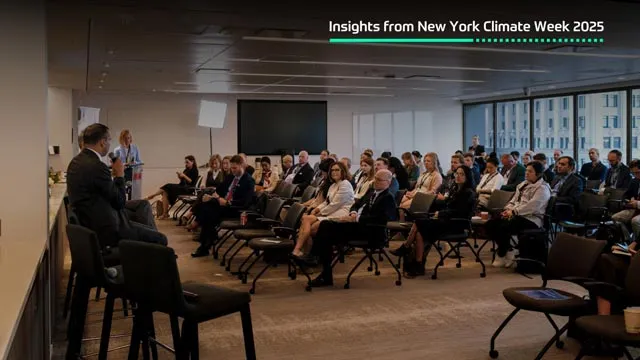
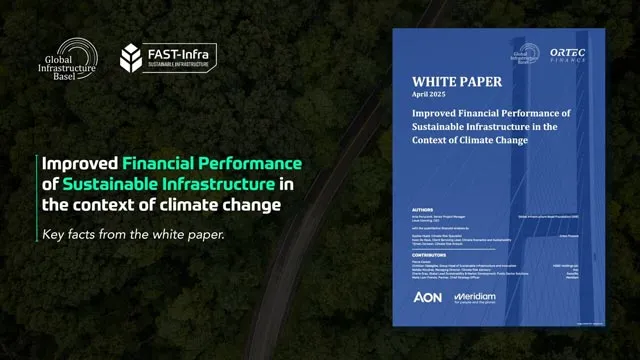
And with Bentley Systems, we kept building a white paper on how technology, digital twins, IoT-enabled monitoring, AI-driven asset management, across the infrastructure lifecycle can help unlock private capital. The starting statistic is a hard one: by McKinsey's estimate, around 80% of African infrastructure projects fail at the feasibility and business-plan stage. We're distributing a companion survey through partner networks including IPFA, GIIA, IGCC, AIGCC, and ICSI, and the findings will go through a structured expert review before publication, with a foreword from FIG Chair Thierry Déau and Bentley's Mark Coates. We're aiming to launch it alongside our new Digital Solutions Working Group at New York Climate Week in September.
Growing the family
We signed a three-way agreement with KPMG and our host organisation, GIB (the Global Infrastructure Basel Foundation), naming KPMG as a regional partner to help bring the FAST-Infra Label to the Gulf and wider MENA region. KPMG signed in May and we countersigned in early June, and the agreement runs to the end of 2027. In practice, that means KPMG becomes an authorised trainer for our FAST-Infra Professional programme, supports governments, financiers, and project sponsors implementing the Label across the region, and joins our working groups and events.
A second agreement, also signed in May and running to the end of 2027, brings in the Istanbul PPP Centre of Excellence, an APMG-accredited training body that has run the annual Istanbul PPP Week since 2015 and delivers PPP certification in English and Turkish. It's a fitting outcome: the partnership traces straight back to the joint session we ran with the Blue Dot Network and the EBRD at Istanbul PPP Week in February. Between the two agreements, we now have delivery partners and institutional relationships reaching exactly the PPP units and public authorities that decide what gets built and to what standard.
Behind the scenes, FAST-Infra Group and the FAST-Infra Label brought their website, social media, CRM, and editorial work under one roof, so our online presence finally looks as joined-up as our partnerships. And we kept building our relationship with Proparco, the French development agency AFD's private-sector financing arm, which invested EUR 2.5 billion across nearly 200 projects in 2025. An in-person meeting in Paris focused on finalising Proparco's own membership of the FAST-Infra Group, and on how the Label could support its environmental and social due diligence, building on the same case-study approach we developed with the Inter-American Development Bank.
Our own thought leadership events
Alongside all of the above, we also designed and ran events of our own this half, with one goal: turning high-level decision-makers into leads for the Label.
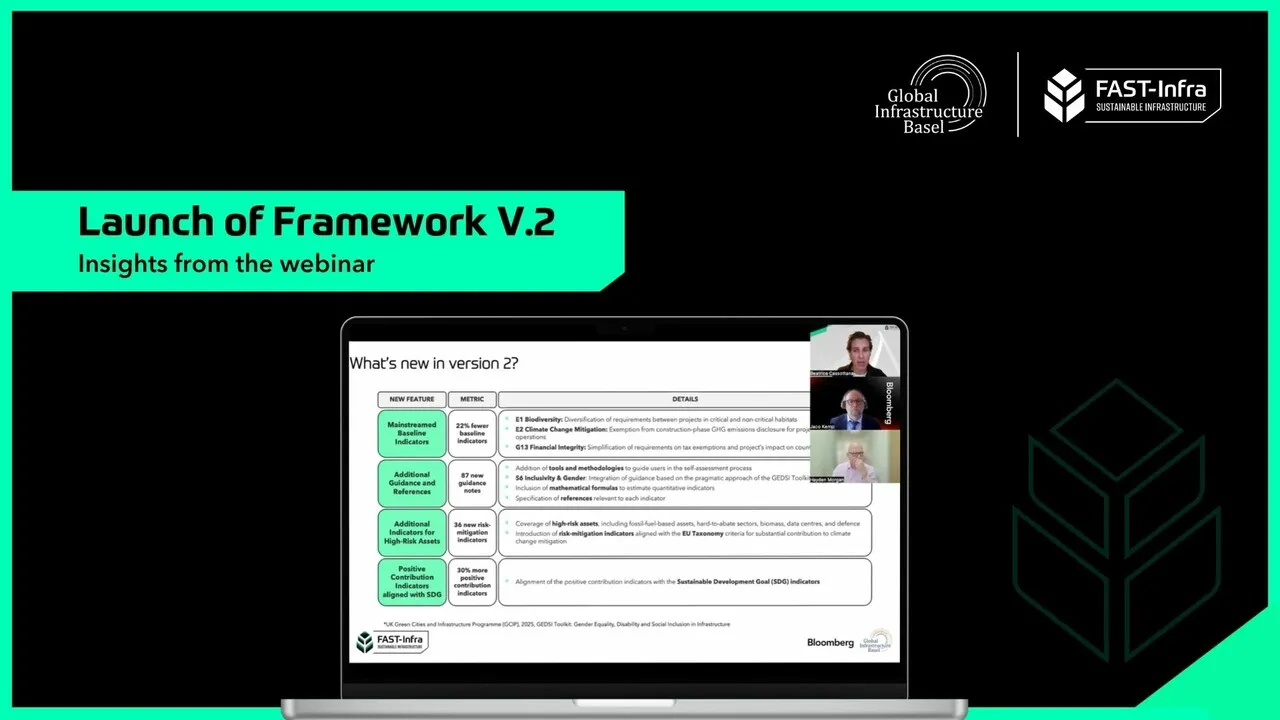
In April, we launched Framework Version 2 with a dedicated webinar. It drew 209 registrations and 98 live participants, 59 of them new to FAST-Infra, and the audience put 14 questions to the panel. Nearly a third of attendees held C-level or senior leadership roles, which told us the update landed exactly where we needed it to: showing the market that our framework responds directly to the feedback it gave us.
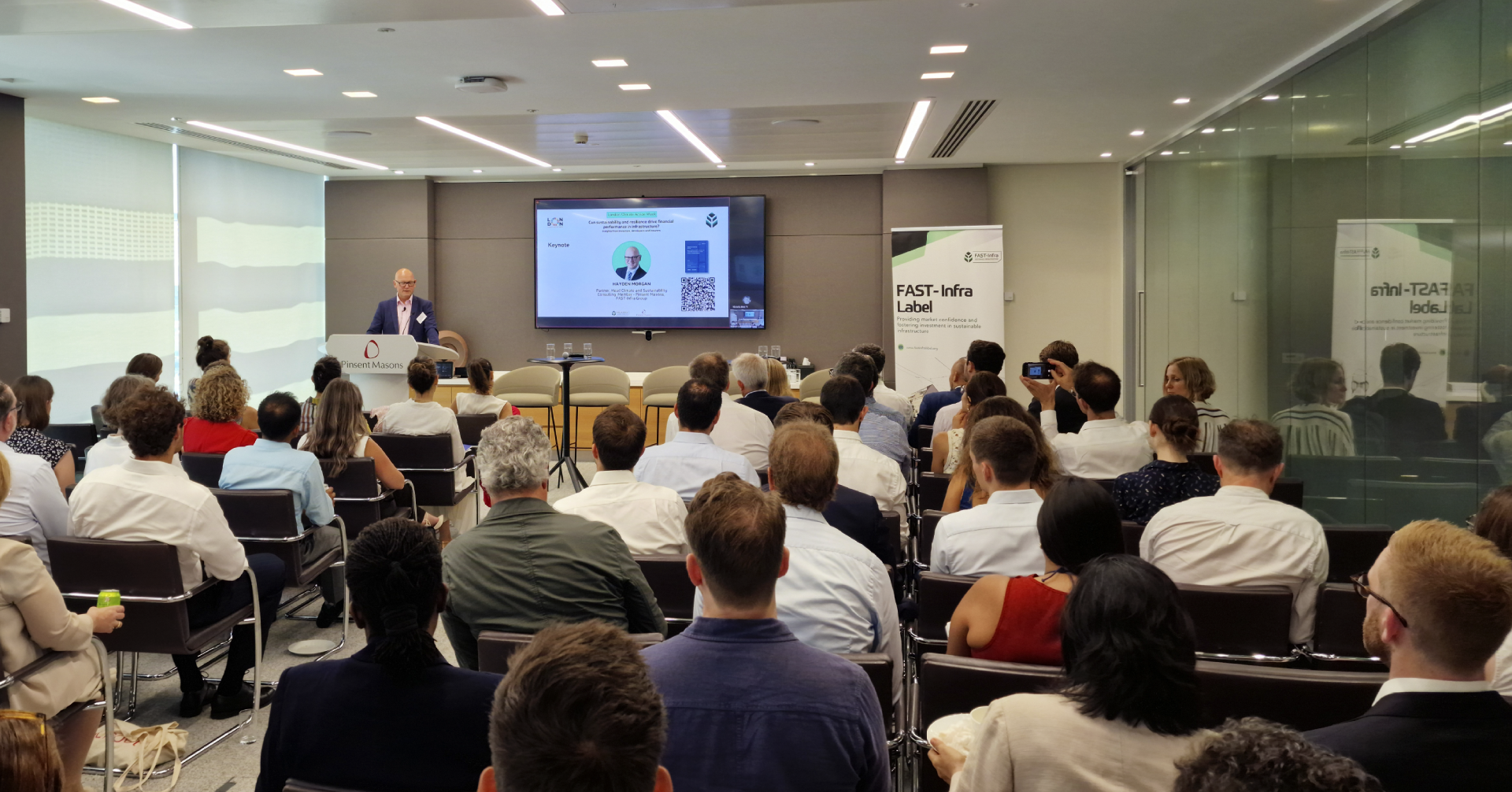
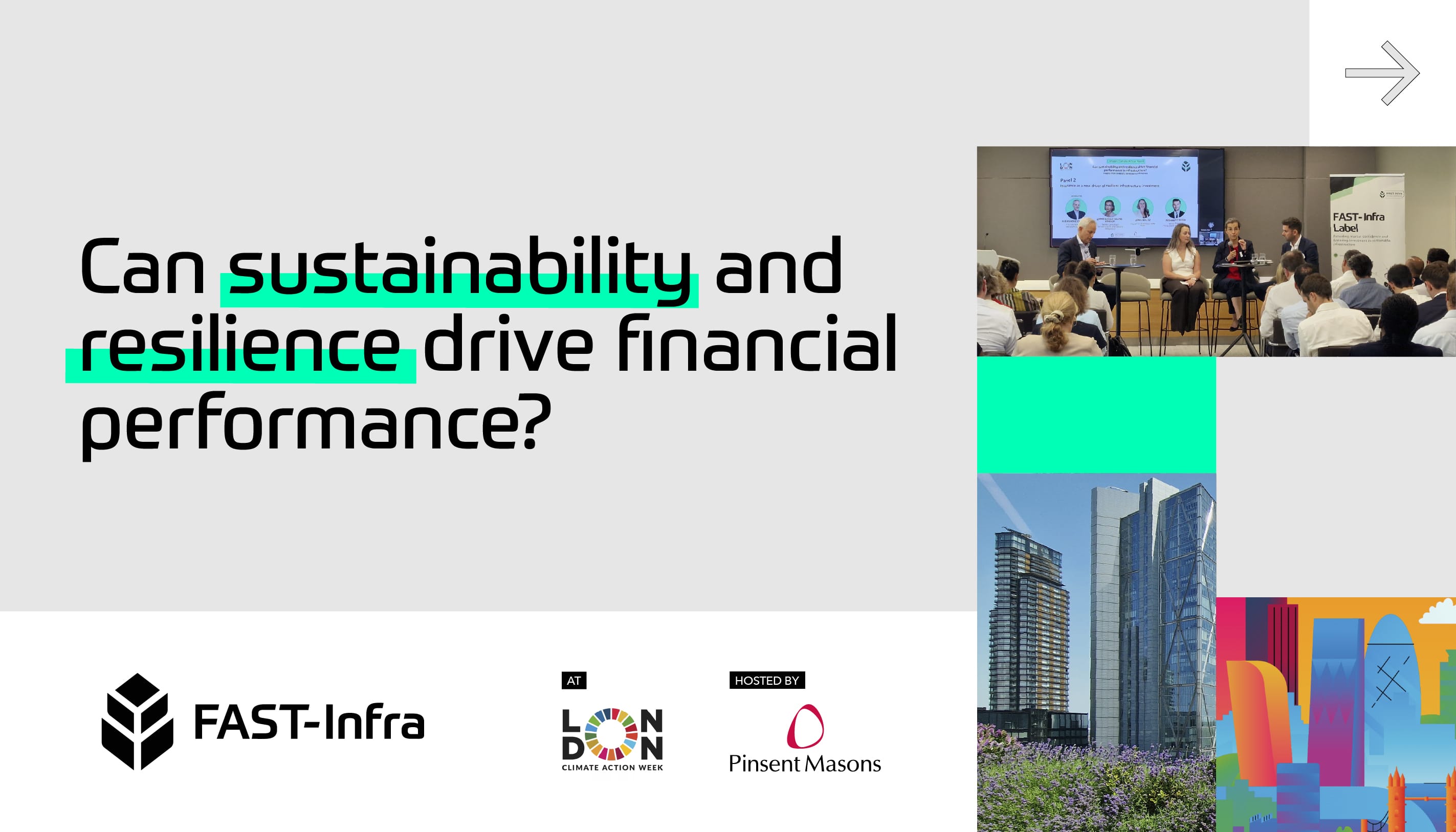
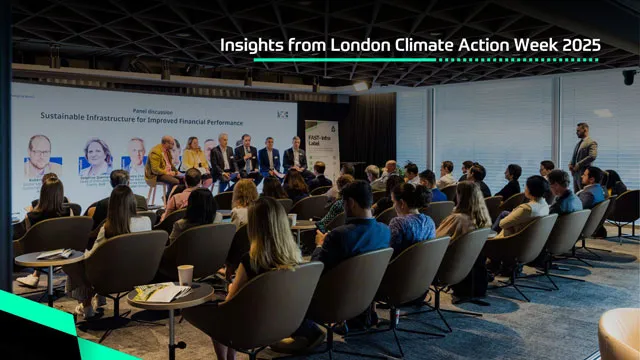
In June, alongside Pinsent Masons, we hosted a panel at London Climate Action Week asking "Can sustainability and resilience drive financial performance in infrastructure?" Around 70 senior professionals from investors, insurers, and asset operators took part across three panel discussions that drew directly on our Insurability Working Group's findings, each group holding a different piece of the evidence that resilience pays and each one leaving with a clearer sense of how the others price it. The wider session drew 165 registrations and 57 participants, and we deliberately weighted the guest list toward Director and C-level attendees with real decision-making power. It was a strong showing for FAST-Infra in the heart of London's financial district: we positioned the Label as a tool for the whole capital stack, one the market already recognises, and used the resilience dimension to bring insurers properly into the conversation. It also built solid leads for the UK market.
In Memoriam: Jean-François Habeau
It is with profound sadness that we remember Jean-François Habeau, FAST-Infra Group's General Manager, colleague, and friend, who passed away suddenly on 4 April 2026 at the age of 45.
Jean-François joined FAST-Infra in December 2024, bringing more than two decades of experience at the intersection of sustainable infrastructure, urban development, and finance, including over a decade as Executive Director of the Global Fund for Cities Development. He had an instinctive gift for connecting people and institutions, and a conviction that ambitious ideas matter only once translated into action. He listened generously, brought warmth and humour to serious work, and never sought attention for himself, only the space to bring others together.
Much of what was covered in this update, be it the partnerships deepened, the standards strengthened, or the doors opened, carries forward the work he helped set in motion during his short but formative time with us. We extend our deepest sympathies to his family, especially his daughter, and to the many colleagues and friends around the world whose lives he touched. Jean-François will be deeply missed. His contribution, his values, and his spirit remain part of FAST-Infra Group.
Looking ahead
Two things defined this first half for us: standards work getting closer to the market, with insurability parameters going into the Label and the Paris session putting real numbers behind the economic case, and our reach extending through partners rather than through headcount, with two training partnerships opening up regions we couldn't have covered directly. The second half brings the New York Climate Week launch of the Bentley white paper and our new Digital Solutions Working Group, the first Urban Planning Accelerator sessions in Brazil and South Africa, Paris Infraweek, and COP31. The measure that matters most, though, is quieter than any of that: turning self-assessments into verifications, and building the cases where the Label demonstrably helped a project reach financial close.
This kind of momentum comes from steady, one-conversation-at-a-time work, from Istanbul to Berlin, Shanghai to Dakar, with engineers, treasuries, development banks, and city planners who all want the same thing: infrastructure that lasts, financed at a price that reflects how sustainable it really is.
Want to follow where we go next? Find us on LinkedIn.
Further Reading







.webp)
.webp)


.webp)
.webp)
.webp)
.webp)
.webp)




.webp)
.webp)




To stay in the loop, subscribe to our news and updates.

